Sales training is an industry built on hope. Companies spend millions every year on workshops, seminars, and motivational events, but the truth is stark: 87% of sales training fails to produce measurable results. For CEOs and sales leaders, this isn’t a minor inconvenience. It’s lost revenue, wasted time, and a team left frustrated and disillusioned.
Unlike generic workshops or one-off seminars, our methods are grounded in behavioral science, reinforced weekly, and applied directly to live deals. This combination ensures skills aren’t just learned, they’re practiced, adopted, and measured.
The Problem: Why Traditional Sales Training Fails
Most sales training programs fail because they are built on assumptions, not behavioral science. Let’s break down the core issues:
1. One-and-Done Workshops Spark Motivation But Don’t Change Habits
Many organizations invest in high-energy, one-day workshops expecting immediate results. These sessions can generate excitement and temporary momentum, but the effects are fleeting. Without ongoing reinforcement, reps naturally revert to old habits and behaviors.
Research shows that only 10–15% of learning from a single session is retained (Forbes). This means the majority of what is taught is lost almost immediately. For CEOs, this represents wasted budget and missed opportunity: you may have motivated your team for a day, but nothing has fundamentally changed in their approach to selling.
Why this happens:
Learning without application doesn’t create behavioral change.
Reps are often left to figure out how to integrate concepts into real sales conversations.
Managers lack a structured approach to ensure follow-through.
2. Tactical Training Without Behavioral Context Leads to Inconsistent Application
Sales techniques and scripts alone are insufficient. Many programs focus on teaching negotiation strategies, objection handling, or closing tactics in isolation. But if reps don’t understand the “why” behind their actions, they struggle to adapt in complex, real-world situations.
The Sandler methodology addresses this by combining skill-building with behavioral psychology. This ensures that reps not only know what to say, but also:
When to ask critical questions
How to read the buying signals
How to manage long, multi-decision-maker sales processes
Without this context, reps can be inconsistent. Some might excel in scripted scenarios, while others revert to old habits, causing uneven team performance. For CEOs, inconsistent sales execution translates directly into missed revenue and unpredictable forecasts.
3. Managers Left to Enforce Change Without Systems Fail to Sustain Results
Too often, managers are expected to enforce new skills on their own, without structured tools, support, or reinforcement systems. This creates inconsistent coaching and frustration.
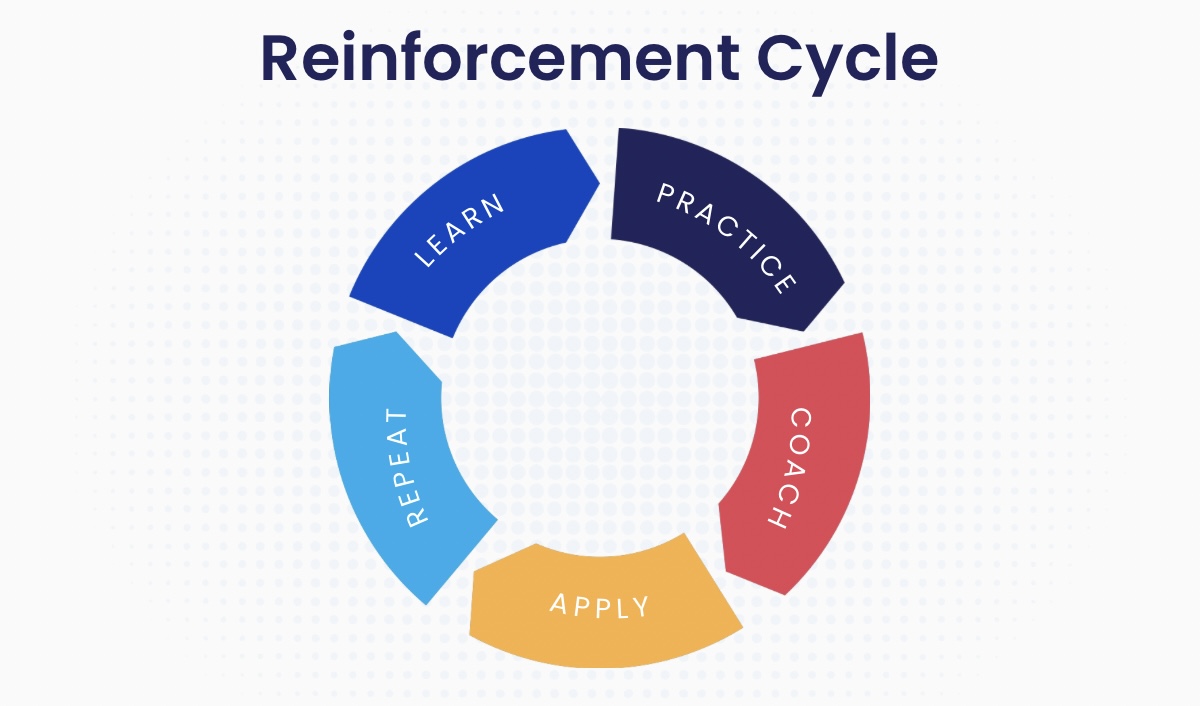
At The Ruby Group, we implement reinforcement cycles, weekly check-ins, and pipeline-based coaching, giving managers the tools to:
Measure skill adoption
Provide meaningful, timely feedback
Ensure the team is following a repeatable, scalable process
Without these systems, even the best-trained reps may fail to apply what they’ve learned consistently. And for executives, that means training investments don’t deliver ROI.
Key statistic: Only 10–15% of training is retained without reinforcement (Forbes). By comparison, teams that adopt structured reinforcement see measurable increases in quota attainment, pipeline health, and revenue predictability.
The Ruby Group Approach
We do things differently. Our approach combines the Sandler Methodology with applied behavioral science, reinforced weekly, and measured against real deal outcomes. Our programs focus on three key areas:
1. Weekly Reinforcement Sessions to Embed Behaviors
Behavior change doesn’t happen overnight. Weekly reinforcement ensures that sales reps turn new skills into habits.
How it works:
Teams review live deals and discuss where skills are being applied successfully or inconsistently.
Trainers provide guided feedback to refine the approach.
Repetition builds retention, so reps adopt behaviors naturally.
Why it matters for executives:
Teams maintain focus and avoid old habits.
Managers can track progress and coach effectively.
Revenue forecasts become more predictable because process adherence improves.
2. Role-Playing Real Sales Scenarios
Learning scripts isn’t enough. Role-playing simulates actual sales conversations and objections, giving reps confidence in handling complex situations. Teams using structured role-play see up to 25% higher win rates .
Benefits:
Practice realistic buyer pushback in a safe environment
Refine questioning, listening, and negotiation skills
Build team confidence and readiness for real-world selling
3. Applied Coaching That Produces Measurable Results
Skills only matter if they translate to revenue outcomes. Applied coaching ties every behavior to live deals with measurable objectives:
Increase discovery questions per call
Shorten the sales cycle
Improve forecast accuracy
Impact for executives:
Coaching becomes a revenue driver, not a checkbox exercise
Teams internalize skills faster
Managers focus on strategy instead of micromanagement
Why This Matters Today
Economic pressures and competitive markets mean every sales investment must deliver measurable results. One-off workshops no longer suffice. Executives need predictable, repeatable sales performance to sustain growth.
By embedding reinforcement, role-play, and applied coaching, The Ruby Group ensures your team is not just trained, they are transformed into a high-performing, revenue-generating engine.
Actionable Takeaways for CEOs and Sales Leaders
Stop relying on one-day workshops; behavior change requires repetition.
Focus on coaching and reinforcement, not just tactics.
Measure skill adoption and tie training to real deal outcomes.
Implement role-play to prepare your team for complex, multi-stakeholder deals.
Track ROI: consistent reinforcement increases revenue predictability.
Invest in Lasting Change
Don’t let your training budget disappear into one-off seminars. Contact The Ruby Group to learn more about becoming a client and get your team prepared for a stronger, more productive 2026.