Wine Sales Are at a 20 Year Low. The Wineries That Win Will Get Better at Selling
The wine industry is facing a reality that winery owners and leaders can no longer afford to ignore.
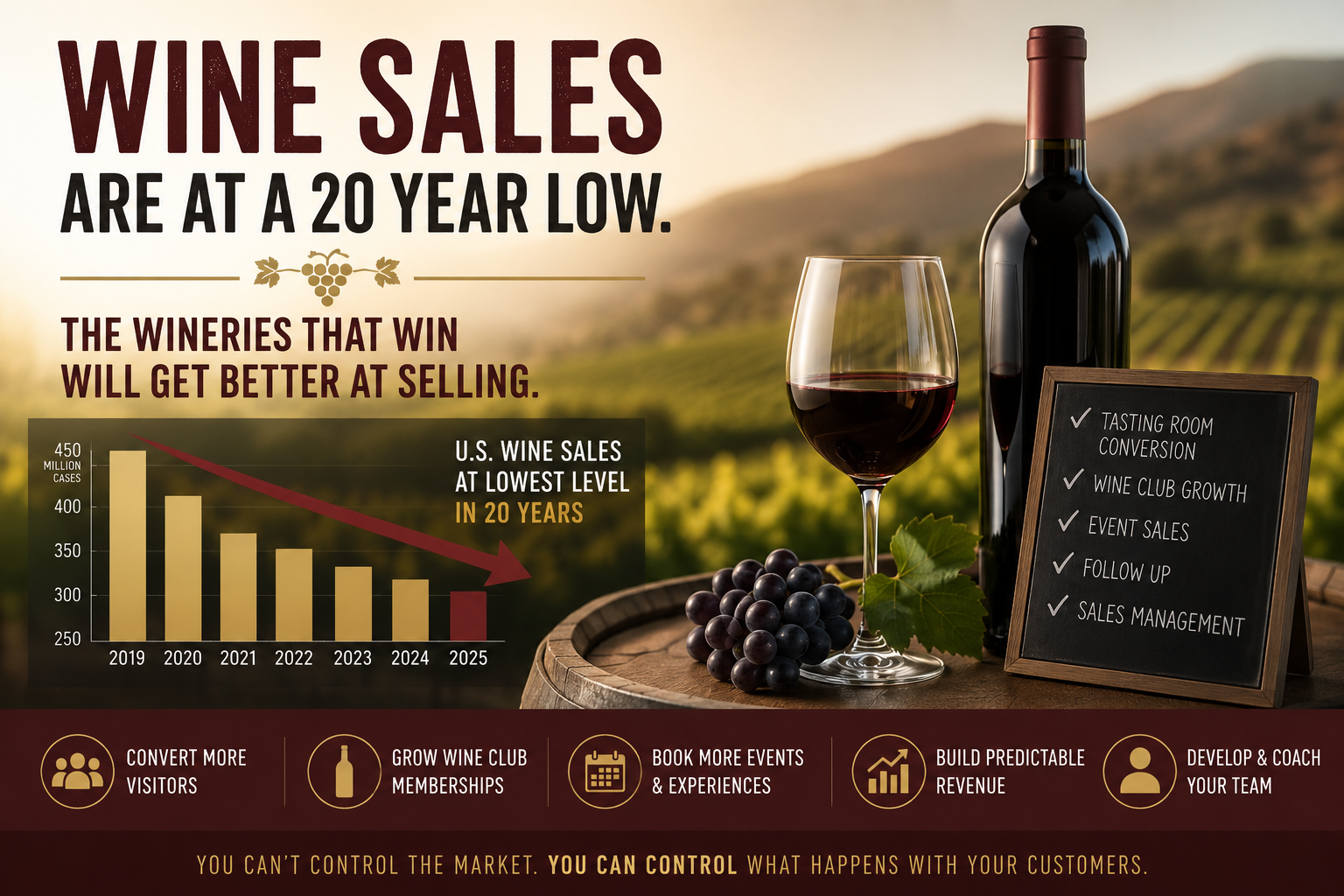
U.S. wine sales have fallen to their lowest level in roughly 20 years.
Consumer habits are changing. Younger buyers are drinking differently. Competition for discretionary spending is increasing. Tasting room traffic is harder to generate. Wine club retention is becoming more important. And wineries can no longer assume that strong products and great hospitality will automatically translate into predictable revenue.
For many wineries, the instinctive response will be to increase marketing.
Spend more on advertising.
Run more events.
Increase social media activity.
Offer more promotions.
Drive more traffic.
Those tactics may help.
But they may also overlook a much more important question.
What happens after the customer arrives?
If the wine market is contracting, getting better at attracting people is only part of the answer.
Wineries also have to become better at converting the opportunities they already have.
You Cannot Control Wine Consumption
There are forces affecting the wine industry that an individual winery cannot control.
You cannot control demographic changes.
You cannot control economic conditions.
You cannot control what younger consumers decide to drink.
You cannot control what competitors charge.
You cannot control how much disposable income consumers have.
But there are things you can control.
You can control the quality of the sales conversation.
You can control how consistently your team asks questions.
You can control how your staff introduces wine club membership.
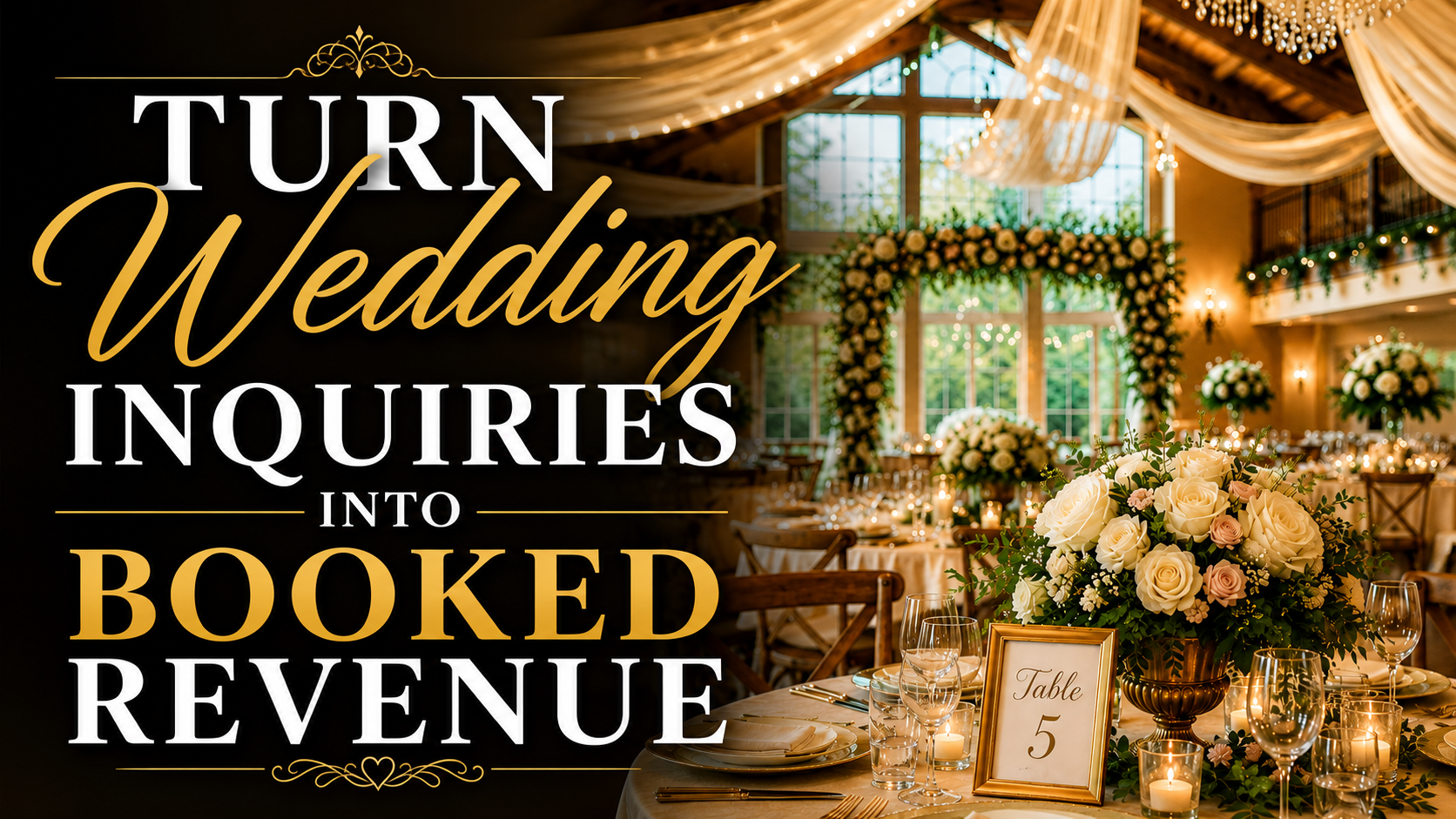
You can control how event inquiries are handled.
You can control follow up.
You can control sales management.
You can control coaching.
You can control accountability.
And you can control whether your winery has an actual sales process or simply hopes that good hospitality leads to a purchase.
That distinction matters more when industry demand is falling.
Great Hospitality Is Not Always Great Selling
Most wineries understand hospitality.
They know how to welcome guests.
They know how to tell the story of the vineyard.
They understand the product.
They know how to create a memorable tasting experience.
Those things matter enormously.
But hospitality and selling are not exactly the same thing.
A guest can have a wonderful experience and still leave without buying very much.
They can compliment the wine and decline the club membership.
They can ask about an event and never book it.
They can say they will order later and disappear.
They can enjoy the tasting and leave with one bottle when they might have comfortably purchased six.
That does not necessarily mean your staff needs to become more aggressive.
In fact, aggressive selling is often the last thing a premium winery should introduce.
The better approach is helping employees learn how to have more effective conversations.
That means learning how to ask questions before making recommendations.
It means understanding why the guest came in.
It means uncovering preferences.
It means identifying what matters to the customer.
It means becoming comfortable discussing membership, additional purchases, events and future visits without creating pressure.
The goal is not to push people.
The goal is to help people buy.
There is an important difference.
The Question Every Winery Owner Should Be Asking
If overall wine consumption declines another five percent, where will your winery replace that revenue?
That can be an uncomfortable question.
It is also an important one.
If the answer is simply, "We need more traffic," there may be opportunities being missed inside the business today.
Consider your existing customer journey.
How many tasting room visitors become purchasers?
How many purchasers become wine club members?
How many wine club members remain members after one year?
What is your average transaction value?
How often does the team introduce additional purchases appropriately?
What percentage of event inquiries actually become booked events?
How many opportunities receive consistent follow up?
How comfortable is your team discussing price?
How often are managers coaching sales conversations?
Can management explain why your best performers outperform everyone else?
Those numbers tell a very different story than overall tasting room traffic.
Revenue Growth May Already Be Inside Your Tasting Room
Imagine 100 people visit your tasting room.
Perhaps 60 purchase wine.
Perhaps 10 join the wine club.
The obvious strategy is to find another 100 visitors.
But what if you improved the results from the original 100?
What if 70 purchased instead of 60?
What if 15 joined the wine club instead of 10?
What if the average purchase increased because employees became better at uncovering what customers actually wanted?
What if better conversations created more return visits and referrals?
Now revenue is growing without doubling traffic.
That is the opportunity many wineries should be examining.
Before asking, "How do we generate more leads?"
Ask:
"How effectively are we converting the opportunities we already paid to create?"
Five Revenue Leaks Wineries Should Examine
1. Tasting Room Conversion
A tasting should not feel like a sales pitch.
But it should have a purpose.
If employees simply pour wine, describe tasting notes and wait for customers to make decisions, the winery may be leaving revenue on the table.
Strong tasting room employees know how to engage customers in conversation.
They ask questions such as:
"What brought you in today?"
"What kinds of wines do you normally enjoy?"
"Are you visiting for the day or are you local?"
"What have you enjoyed most so far?"
"Is this mostly for you or are you looking for something to bring home or give as a gift?"
Those questions do not feel like selling.
They feel like service.
And they give the employee information that allows them to make better recommendations.
2. Wine Club Conversion
Wine clubs can provide one of the most valuable sources of recurring revenue for a winery.
Yet many employees are uncomfortable discussing membership.
They worry about sounding pushy.
So they mention the club quickly at the end of the tasting and hope the customer says yes.
That is not a process.
A stronger approach is to understand whether membership actually makes sense for the guest.
For example:
"You mentioned you visit the area a few times each year and usually order wine online. Would it be a bad idea to show you how our club works and you can decide whether it makes sense?"
That conversation feels very different from:
"Would you like to join our wine club today?"
One creates pressure.
The other creates permission.
3. Average Transaction Value
Many tasting room employees assume customers will tell them how much they want to buy.
Sometimes they will.
Often they will not.
An employee who understands the customer's preferences can naturally recommend additional bottles, larger purchases, gifts or selections for future occasions.
This is not about maximizing every transaction.
It is about making appropriate recommendations based on what the customer has already told you.
4. Event Sales
Private events, corporate gatherings, weddings and special experiences can represent substantial revenue.
But event inquiries are often handled inconsistently.
Someone asks about availability.
The winery sends information.
The customer says they will think about it.
Then nothing happens.
A structured sales conversation can help determine:
Why are they considering the event?
What experience are they trying to create?
Who is involved in the decision?
What budget have they considered?
When do they need to make a decision?
What would prevent them from moving forward?
Without those questions, the winery may simply become one of several proposals sitting in an inbox.
5. Sales Management and Accountability
Training employees once is not enough.
Behavior changes when management reinforces it.
Managers should be able to coach the behaviors that create revenue.
Not simply review the final sales number.
For example:
How many meaningful wine club conversations occurred?
What objections is the team hearing?
Where are customers disengaging?
Which questions are producing better conversations?
What are your strongest employees doing differently?
Where does the team need coaching?
Revenue is a result.
Managers need to understand the behaviors that create the result.
Stop Measuring Only What Happened
Many winery leaders review monthly sales numbers and ask whether the team hit the goal.
That tells you what happened.
It does not necessarily tell you why.
A better sales management system looks at leading indicators.
Tasting room traffic.
Purchase conversion.
Wine club conversations.
Wine club conversion.
Average transaction value.
Event inquiries.
Event conversion.
Follow up activity.
Retention.
Repeat purchase behavior.
Employee performance.
Once those numbers become visible, management can identify where revenue is leaking.
That allows coaching to become specific.
Instead of saying:
"We need to sell more memberships."
A manager can say:
"We had 220 qualified visitors last week and only 48 were actually invited into a conversation about membership. Let's understand why."
That is actionable.
Your Employees Do Not Need to Become Salespeople
This is one of the biggest concerns I hear when businesses built around hospitality consider sales training.
"We don't want our people to become pushy."
Good.
They shouldn't.
The objective is not to turn hospitality professionals into stereotypical salespeople.
The objective is to give them a comfortable, repeatable conversational framework.
One where they can ask good questions.
Listen.
Understand motivation.
Discuss money comfortably.
Identify decision factors.
Recommend appropriate solutions.
And allow the customer to make a decision without pressure.
In many ways, that actually creates a better customer experience.
People generally do not dislike salespeople because they ask questions.
They dislike salespeople who do not listen.
The Market May Be Changing Faster Than Your Sales Process
When an industry is expanding, weaknesses in a sales process can be hidden.
More people enter the category.
Traffic increases.
Customers spend.
Revenue grows.
Companies can mistake market momentum for sales effectiveness.
When the market contracts, those weaknesses become easier to see.
Suddenly conversion matters more.
Retention matters more.
Average transaction size matters more.
Follow up matters more.
Management matters more.
The wineries that adapt may not necessarily be the wineries with the biggest advertising budgets.
They may be the wineries that become much more disciplined about what happens once a potential customer engages with them.
A Simple Exercise for Winery Owners
At your next leadership meeting, write these five numbers on the board:
Tasting room visitor to purchaser conversion
Purchaser to wine club member conversion
Average customer transaction
Event inquiry to booking conversion
Wine club retention
Then ask your leadership team three questions.
Do we know these numbers?
Are they improving?
Do we have a defined process for improving them?
If the answer to any of those questions is no, you may have found an opportunity.
The Wineries That Win Will Control What They Can Control
No winery can single handedly reverse declining wine consumption.
But wineries can decide how they respond.
Some will react by discounting.
Some will simply spend more on marketing.
Some will wait for the market to improve.
Others will examine the economics of every customer interaction and ask:
How can we create more value?
How can we improve conversion?
How can we retain more customers?
How can we improve the way our people communicate?
How can managers coach more effectively?
How can we build a repeatable revenue process?
Those are questions you can do something about.
And in a challenging market, controlling the things you can control may become one of your strongest competitive advantages.
Is Revenue Leaking Out of Opportunities You Already Have?
At Sandler by Tridenza, we work with winery owners, leaders and customer facing teams to improve the conversations and behaviors that drive tasting room sales, wine club memberships, event revenue, customer retention and predictable growth.
Our approach is not about scripts, pressure or aggressive selling.
It is about helping your team create better conversations, qualify opportunities, ask more effective questions and guide customers toward decisions that make sense for both sides.
If the decline in wine sales has you wondering where additional revenue could come from, a good place to start may be the opportunities already walking through your doors.
We offer a complimentary Winery Revenue Conversion Assessment to help identify potential gaps in your current sales process and where coaching or process improvements may create the greatest impact.
You may discover that your biggest growth opportunity is not finding more customers.
It is getting better results from the customers you already have.
Ready to Find the Revenue Opportunities Already Inside Your Winery?
If wine sales are becoming harder to predict, the answer may not be more traffic. It may be improving what happens with the opportunities you already have.
At Sandler by Tridenza, we help wineries strengthen tasting room conversations, improve wine club conversion, increase event sales, build stronger follow up habits, and create a more consistent sales management process.
If you would like to see where revenue may be leaking from your current sales process, visit our winery sales training page and learn how we help winery teams sell more effectively without becoming pushy or scripted.
Learn more about Sandler Wine and Vineyard Sales Training:
https://info.tridenza.sandler.com/en/consistent-winery-growth-through-proven-sales-training-sandler-by-tridenza
Or schedule a conversation to explore whether this approach makes sense for your winery.