If you're responsible for revenue, you've probably asked yourself a familiar question:
"Why aren't we getting the results we know our team is capable of?"
Most leaders assume the answer lies in hiring better salespeople, increasing prospecting activity, or investing in another sales training program. While each of those initiatives can help, they rarely solve the underlying problem.
The reality is that sales performance is rarely determined by one factor. It is the outcome of dozens of interconnected systems, behaviors, coaching conversations, leadership decisions, and habits that either reinforce success or slowly erode it.
Organizations with consistently high-performing sales teams don't simply work harder. They create an environment where success becomes repeatable. Their salespeople follow a defined process, managers coach instead of rescue, accountability is built into daily routines, and continuous improvement becomes part of the culture.
That's why two companies with similar products, pricing, and talent can produce dramatically different results.
At Sandler by PEAK Sales Performance, we've worked with business owners, executives, sales leaders, and sales professionals across a wide range of industries. While every organization has unique challenges, the highest-performing teams consistently share the same foundational characteristics.
This guide explores those characteristics and provides a practical framework for improving sales performance in a sustainable way. Whether you're leading a growing sales team, building a repeatable revenue engine, or looking to increase consistency across your organization, you'll learn what separates average sales organizations from exceptional ones.
What Is Sales Performance?
Sales performance is the ability of an individual salesperson or an entire sales organization to consistently achieve desired business outcomes through effective behaviors, disciplined execution, and continuous improvement.
Many people define sales performance by revenue alone. Revenue is certainly important, but it tells only part of the story. Revenue is a lagging indicator. By the time sales numbers appear on a report, the behaviors that created those results have already occurred.
High-performing organizations focus just as much on the leading indicators that influence future revenue, including:
- Prospecting consistency
- Qualified first meetings
- Opportunity advancement
- Sales cycle progression
- Coaching frequency
- Customer retention
- Referral generation
- Pipeline quality
- Sales activity aligned with strategy
When these activities are measured, coached, and reinforced consistently, revenue becomes far more predictable.
The Seven Drivers of Sales Performance
Organizations often look for a single solution to improve results. They purchase new technology, hire additional salespeople, or schedule another training event, hoping one initiative will solve every challenge.
Sustainable sales performance doesn't work that way.
The strongest sales organizations build multiple systems that work together. When one area weakens, overall performance suffers. When all seven drivers are aligned, growth becomes significantly more predictable.
The seven drivers are:
- A Repeatable Sales Process
- Coaching That Develops People
- Accountability That Reinforces Behavior
- Selling Skills That Continue to Improve
- A Winning Sales Mindset
- Continuous Reinforcement
- Leadership That Creates a Performance Culture
Let's begin with the first three.
Driver 1: Build a Repeatable Sales Process
One of the biggest differences between average and elite sales organizations is consistency.
Top-performing salespeople don't improvise every conversation. They follow a repeatable process that helps them qualify opportunities, uncover business challenges, establish trust, and guide buyers through a structured decision-making journey.
Without a defined sales process, every salesperson develops their own approach. Forecasts become unreliable, onboarding new hires takes longer, coaching becomes inconsistent, and managers struggle to identify where opportunities are stalling.
A repeatable process creates a common language across the sales team. It allows managers to coach more effectively, improves forecasting accuracy, and provides buyers with a more consistent experience.
Just as importantly, it helps salespeople avoid common mistakes such as presenting solutions too early, chasing unqualified opportunities, or competing primarily on price.
Driver 2: Coaching Creates Performance
Many organizations invest heavily in developing salespeople but spend very little time developing sales managers.
That creates a significant gap.
Training introduces new ideas. Coaching transforms those ideas into lasting behaviors.
The most effective sales managers don't simply inspect numbers or ask for pipeline updates. They observe, ask thoughtful questions, reinforce successful behaviors, and help salespeople think through opportunities independently.
Effective coaching is proactive rather than reactive.
Instead of stepping in to save deals at the last minute, great managers help salespeople improve their decision making before problems occur.
Organizations that establish a structured coaching rhythm often experience improvements in confidence, execution, accountability, and sales consistency because coaching becomes part of everyday operations rather than an occasional event.
Managers who coach consistently also build stronger teams. Salespeople become more self-sufficient, more resilient, and better equipped to navigate complex buying decisions.
Driver 3: Accountability Drives Consistency
Accountability is frequently misunderstood.
Many organizations treat accountability as something that happens after results fall short.
High-performing organizations approach it differently.
They create accountability around behaviors long before results become a problem.
Instead of asking, "Did you hit your quota?" they ask questions such as:
- Did you complete your prospecting plan?
- How many quality conversations did you initiate?
- Which opportunities advanced this week?
- What did you learn from your coaching session?
- Which commitments did you keep?
This shift changes accountability from punishment into continuous improvement.
When expectations are clearly defined and measured consistently, salespeople develop stronger habits and greater ownership of their performance.
Accountability also creates valuable coaching opportunities. Rather than focusing only on outcomes, managers can identify the specific behaviors that need adjustment before revenue suffers.
Organizations with strong accountability systems generally experience more predictable pipelines, higher engagement, faster development of new hires, and better long-term sales performance because everyone understands what success looks like long before the quarter ends.
Driver 4: Selling Skills Must Continuously Evolve
The best salespeople never stop learning.
Markets change. Buyers change. Competitors change. The questions prospects ask today are different from the ones they asked just a few years ago, and sales professionals who rely on yesterday's techniques often find themselves struggling to maintain consistent results.
Developing sales skills isn't about memorizing scripts or perfecting a presentation. It's about becoming more effective at every stage of the sales conversation.
That includes:
- Building rapport without relying on small talk.
- Asking questions that uncover business challenges instead of surface-level symptoms.
- Qualifying opportunities before investing significant time.
- Handling objections by understanding the real concern behind them.
- Discussing budget comfortably and honestly.
- Gaining commitment to clear next steps.
- Negotiating without unnecessary discounting.
The strongest sales organizations don't assume these skills will naturally improve through experience alone. They create an environment where learning is continuous through coaching, practice, role-playing, peer feedback, and reinforcement.
One of the biggest myths in sales is that experience automatically leads to expertise. In reality, experience without feedback often reinforces ineffective habits. A salesperson can spend ten years repeating the same mistakes just as easily as they can spend ten years becoming exceptional.
Organizations that consistently outperform their competitors invest in developing their people long after onboarding is complete. They recognize that improving a salesperson's ability to conduct one conversation more effectively can influence hundreds of future opportunities.
Driver 5: Mindset Influences Every Sales Conversation
Technical skills matter, but they are only part of the equation.
Every sales conversation is influenced by what is happening between the salesperson's ears.
Fear of rejection.
Fear of asking difficult questions.
The need to be liked.
The desire to avoid conflict.
The pressure to make every opportunity work.
These internal beliefs often have a greater impact on sales performance than product knowledge or presentation skills.
For example, a salesperson who is uncomfortable discussing budget may avoid the conversation entirely, only to discover weeks later that the prospect never had the resources to move forward. Another salesperson may hesitate to challenge a prospect's assumptions because they fear damaging the relationship, even when asking one difficult question could uncover the real issue preventing a buying decision.
High-performing sales professionals develop the confidence to remain curious instead of becoming emotionally attached to an outcome.
They don't chase every opportunity. They qualify carefully.
They don't assume every prospect is a fit. They seek mutual agreement.
They don't fear hearing "no." They understand that an honest answer is far more valuable than a false sense of optimism.
This mindset allows salespeople to have more authentic conversations, make better decisions, and build stronger relationships based on trust rather than persuasion.
Driver 6: Reinforcement Creates Lasting Change
Organizations often expect a single training event to produce lasting improvement.
Unfortunately, that's rarely how people learn.
Research on learning and habit formation consistently shows that knowledge fades quickly without reinforcement. Even the most engaging workshop loses value if participants return to the same routines without coaching, accountability, and opportunities to practice.
Think about any skill you've mastered.
Playing a musical instrument.
Learning a new language.
Improving your golf swing.
Becoming physically fit.
None of those abilities develop through a single lesson. They improve through repetition, feedback, correction, and continued practice over time.
Sales is no different.
The organizations that achieve sustainable performance don't view training as an isolated event. They build reinforcement into the rhythm of the business.
Managers regularly coach live opportunities.
Salespeople practice upcoming conversations before important meetings.
Teams discuss recent wins and losses together.
New concepts are revisited repeatedly rather than introduced once and forgotten.
This continuous cycle transforms knowledge into habit.
More importantly, it creates consistency across the sales organization. Rather than relying on a few top performers, companies develop a culture where improvement becomes everyone's responsibility.
Driver 7: Leadership Shapes Sales Performance
Every sales organization eventually reflects the standards established by its leaders.
When leaders consistently coach, hold people accountable, communicate clear expectations, and model the behaviors they expect from others, those behaviors become part of the culture.
When they don't, inconsistency follows.
Many organizations mistakenly believe their primary responsibility is managing activity.
Exceptional leaders understand their role is much broader.
They recruit people who fit the organization's values.
They establish clear expectations.
They create psychological safety where salespeople can discuss lost opportunities honestly.
They encourage learning instead of assigning blame.
They celebrate disciplined execution, not just favorable outcomes.
Perhaps most importantly, they recognize that leadership is demonstrated through consistency rather than intensity.
It's relatively easy to become highly involved when the quarter is ending or revenue is behind plan. Strong sales leaders provide the same level of coaching, accountability, and support whether the team is exceeding expectations or facing significant challenges.
That consistency creates stability. Stability creates confidence. Confidence creates better execution.
Over time, those daily leadership decisions become a competitive advantage that is difficult for other organizations to replicate.
Why Sales Training Alone Rarely Changes Performance
Organizations often respond to disappointing sales results with a familiar solution.
They schedule another training program.
Training has tremendous value. It introduces new ideas, exposes blind spots, and provides proven techniques that salespeople can immediately apply. But training alone rarely creates lasting behavioral change.
Imagine attending a two-day fitness seminar.
You learn proper nutrition.
You understand effective workout routines.
You leave motivated to make healthier choices.
If you never exercise again, never adjust your eating habits, and never receive feedback from a coach, your long-term results will probably look very similar to where you started.
Sales development follows the same pattern.
Knowledge is only the beginning.
Lasting improvement occurs when training is supported by coaching, reinforcement, accountability, leadership, and consistent application in real selling situations.
Organizations that achieve the greatest return on their training investment don't ask, "What happens during the workshop?"
They ask, "What happens during the next twelve months?"
That question changes everything.
Measure the Behaviors That Create Revenue
Revenue will always be one of the most important performance indicators for any sales organization.
The problem is that revenue tells you what already happened.
If leaders only review revenue, quota attainment, or closed business, they're looking in the rearview mirror.
High-performing organizations pay close attention to the leading indicators that influence future results.
Some of the most valuable measurements include:
- New prospecting conversations initiated each week.
- Qualified first appointments.
- Opportunities advanced to the next stage.
- Average sales cycle length.
- Percentage of opportunities that become qualified.
- Average deal size.
- Gross margin.
- Customer retention.
- Referral generation.
- Coaching sessions completed.
- Practice and role-play participation.
- Pipeline health by salesperson.
These measurements provide far greater insight into future revenue than closed business alone.
When leaders regularly coach the behaviors that produce results, sales performance becomes significantly more predictable. Instead of reacting to missed numbers after the fact, they can identify challenges early and make adjustments while opportunities are still in progress.
That proactive approach is one of the defining characteristics of high-performing sales organizations.
The Sales Performance Flywheel: Why Great Sales Teams Keep Getting Better
Many organizations think of sales improvement as a series of disconnected initiatives.
This quarter we'll invest in training.
Next quarter we'll implement a new CRM.
Later we'll hire additional salespeople.
Eventually we'll improve coaching.
While each initiative may provide value, treating them as isolated projects rarely creates lasting change.
High-performing sales organizations think differently. They understand that sales performance is a system where every component influences the next. When one area improves, it strengthens the others. Over time, those improvements compound.
We call this the Sales Performance Flywheel.
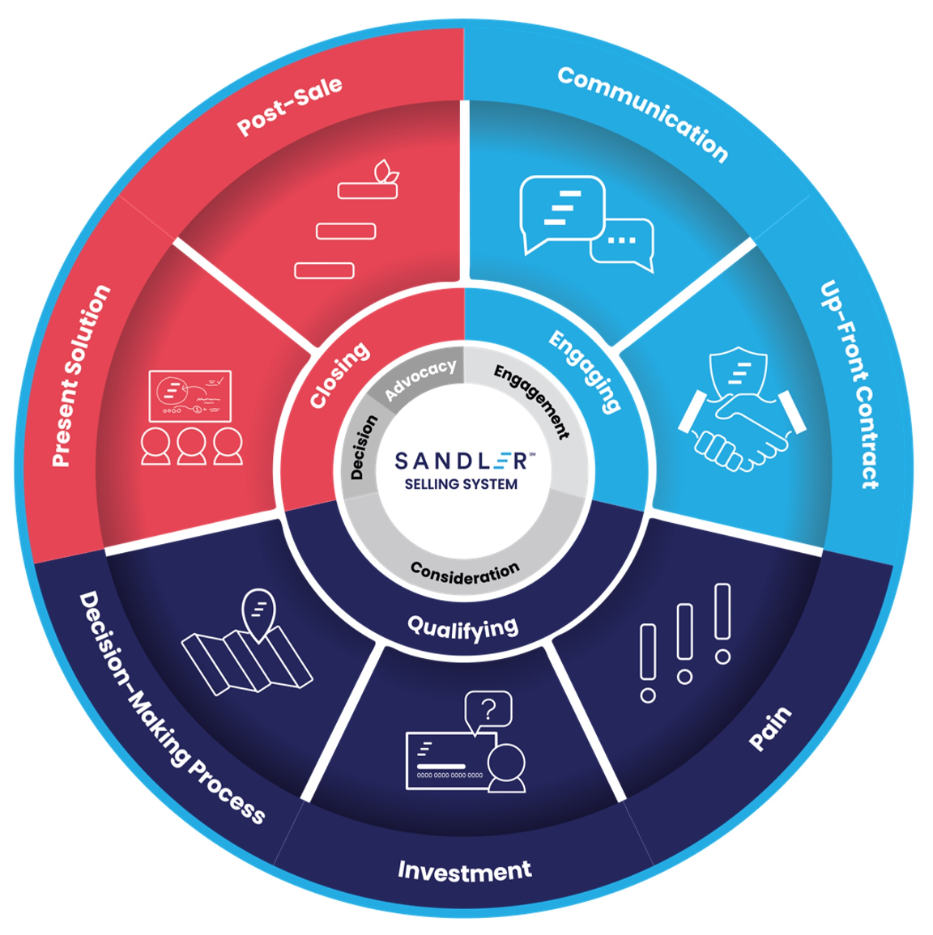
It begins with leadership.
Strong leaders establish clear expectations and create a culture focused on growth. They invest in coaching instead of simply inspecting results. Coaching reinforces accountability, helping salespeople build better habits and stronger skills. Those improved skills lead to more productive sales conversations, which create better customer experiences and stronger business outcomes.
As salespeople experience more success, their confidence grows. That confidence reinforces the organization's culture, making coaching more effective and leadership more impactful.
The cycle repeats.
Unlike a one-time sales initiative, a flywheel builds momentum. Every improvement makes the next improvement easier.
Organizations that sustain high levels of performance aren't constantly looking for dramatic breakthroughs. They're continually strengthening the systems that keep the flywheel turning.
Why Buyers Have Changed, Even If Your Sales Process Hasn't
Today's buyers have access to more information than ever before.
Before speaking with a salesperson, they often research competitors, compare pricing, read reviews, watch videos, consult peers, and evaluate potential solutions independently.
That has fundamentally changed the role of the salesperson.
Years ago, sales professionals were often the primary source of information.
Today, buyers don't need more information.
They need better conversations.
The highest-performing salespeople don't win because they deliver the best presentation. They win because they ask better questions, uncover business issues buyers haven't fully considered, challenge assumptions respectfully, and help prospects make confident decisions.
This shift requires organizations to rethink how they define sales excellence.
Success is no longer measured by how well a salesperson explains a solution.
It's measured by how effectively they help buyers solve meaningful business problems.
The Role of AI in Sales Performance
Artificial intelligence is changing the way sales organizations operate, but it isn't replacing the fundamentals of professional selling.
AI can summarize meetings, identify trends within CRM data, assist with research, draft follow-up emails, analyze conversations, and even provide realistic role-play scenarios for practice.
These capabilities create valuable efficiencies.
However, AI cannot replace trust.
It cannot build authentic relationships.
It cannot understand the political dynamics inside a prospect's organization.
It cannot recognize hesitation that isn't spoken aloud.
It cannot replace empathy, curiosity, judgment, or emotional intelligence.
Organizations that achieve the greatest results view AI as an accelerator rather than a replacement.
Sales professionals spend less time on administrative work and more time preparing for meaningful customer conversations.
Managers use AI to identify coaching opportunities instead of relying solely on intuition.
Leaders make better decisions because they have greater visibility into trends across the sales organization.
When combined with effective coaching and a disciplined sales process, AI becomes another tool that strengthens the Sales Performance Flywheel.
Recognizing the Warning Signs of Underperformance
Sales performance problems rarely appear overnight.
In most organizations, warning signs emerge weeks or months before revenue begins to decline.
The challenge is recognizing those signals early enough to respond effectively.
Some of the most common indicators include:
- Salespeople are staying busy but qualified pipeline continues to shrink.
- Forecast accuracy becomes increasingly unreliable.
- Opportunities stall after proposals are delivered.
- Discounting becomes more common.
- Prospecting activity declines when existing opportunities appear strong.
- Managers spend more time rescuing deals than coaching people.
- Sales meetings focus almost entirely on numbers instead of strategy.
- New hires take longer than expected to become productive.
- Customer referrals begin to decrease.
- Top performers continue to excel while the rest of the team struggles to improve.
None of these issues should be viewed in isolation.
Instead, they should prompt leaders to ask a more important question:
Which part of our sales performance system needs attention?
Looking beyond symptoms allows organizations to solve root causes instead of repeatedly addressing the same problems.
A Practical Sales Performance Improvement Plan
Improving sales performance doesn't require rebuilding your organization overnight.
The most successful companies focus on making consistent progress in several key areas at the same time.
Start by evaluating your current sales process. Is it documented, repeatable, and consistently followed across the team?
Assess the quality of coaching your sales managers provide. Are they developing people or simply reviewing pipeline reports?
Review accountability. Are expectations clear, measurable, and reinforced regularly?
Identify skill gaps that may be limiting results. Consider both technical selling skills and communication skills.
Evaluate your reinforcement strategy. How often are salespeople practicing, receiving feedback, and applying what they've learned?
Finally, examine leadership. Does your culture encourage continuous improvement, or does coaching only happen when results fall short?
Organizations that answer these questions honestly often discover that improving sales performance isn't about fixing one problem. It's about strengthening an entire system.
Sales Performance Self-Assessment
Before investing in new technology, hiring additional salespeople, or changing compensation plans, take a step back and evaluate the fundamentals.
Ask yourself:
- Does every salesperson follow the same sales process?
- Are managers coaching consistently every week?
- Do salespeople receive meaningful feedback after important customer conversations?
- Is accountability focused on behaviors as well as results?
- Are leading indicators measured as closely as revenue?
- Is training reinforced throughout the year?
- Do salespeople feel comfortable discussing budget, decision making, and difficult business issues?
- Does leadership consistently model the behaviors expected throughout the organization?
- Is your sales culture built around continuous improvement?
- If you hired three new salespeople tomorrow, would your current systems help them succeed quickly?
The more "no" answers you have, the greater the opportunity to improve sales performance through better systems rather than simply working harder.
Sales Performance Myths That Hold Organizations Back
Many sales organizations continue to make decisions based on assumptions that sound reasonable but ultimately limit growth. Challenging these myths can help leaders focus on the changes that have the greatest impact.
Myth #1: More Activity Automatically Leads to More Sales
Activity is important, but activity without purpose creates little value.
Making more calls, sending more emails, or scheduling more meetings won't necessarily improve results if salespeople are targeting the wrong prospects or advancing unqualified opportunities.
High-performing teams focus on the quality of conversations, not just the quantity.
Myth #2: Great Salespeople Don't Need Coaching
Some organizations assume coaching should be reserved for struggling salespeople.
The opposite is usually true.
Top performers actively seek feedback because they understand that even small improvements can produce significant long-term results. Organizations that coach their strongest people continue raising the performance ceiling for the entire team.
Myth #3: Sales Training Is Enough
Training creates awareness.
Coaching creates improvement.
Reinforcement creates lasting habits.
Without ongoing application and accountability, even the best training programs lose their impact over time. Organizations that treat professional development as a continuous process consistently outperform those that rely on one-time events.
Myth #4: More Leads Will Solve Revenue Problems
Generating additional leads may increase activity, but it doesn't automatically increase revenue.
Many organizations already have enough opportunities. The bigger challenge is qualifying prospects effectively, advancing opportunities consistently, and helping buyers make informed decisions.
Before investing more heavily in lead generation, evaluate how efficiently your current pipeline converts to revenue.
Myth #5: AI Will Replace Professional Salespeople
Artificial intelligence is becoming an important part of modern selling, but it isn't replacing human relationships.
Buyers still make important business decisions based on trust, credibility, confidence, and meaningful conversations.
Organizations that combine skilled sales professionals with thoughtful use of AI are likely to outperform those that rely exclusively on technology or ignore it altogether.
A Sales Performance Improvement Checklist
Use the following checklist to evaluate the health of your sales organization.
Sales Process
☐ We have a documented sales process that every salesperson follows.
☐ Sales stages are clearly defined and consistently used.
☐ Opportunities are qualified before significant time is invested.
Coaching
☐ Sales managers coach consistently rather than only reviewing pipeline.
☐ Coaching conversations focus on developing people, not simply inspecting numbers.
☐ Salespeople receive meaningful feedback after important customer interactions.
Accountability
☐ Expectations are clearly defined.
☐ Leading indicators are reviewed regularly.
☐ Salespeople take ownership of commitments and follow-through.
Skills
☐ Salespeople continuously develop questioning, qualifying, negotiation, and closing skills.
☐ Practice and role-playing are part of the team's regular rhythm.
Leadership
☐ Leaders model the behaviors they expect from others.
☐ Coaching and accountability remain consistent throughout the year.
☐ Continuous improvement is part of the organization's culture.
If several of these statements don't describe your organization today, don't view them as weaknesses. View them as opportunities. Improving sales performance rarely requires starting over. It usually begins with strengthening the systems that support your people every day.
Frequently Asked Questions About Sales Performance
What is sales performance?
Sales performance is the ability of a salesperson or sales organization to consistently achieve desired business outcomes through effective behaviors, disciplined execution, strong leadership, and continuous improvement. While revenue is an important measure, true sales performance also includes the quality of the sales process, coaching, accountability, customer relationships, and long-term growth.
How do you improve sales performance?
Improving sales performance starts by evaluating the entire sales system rather than focusing on one issue. Organizations that see the greatest improvement typically strengthen their sales process, coaching, leadership, accountability, skill development, and reinforcement simultaneously.
What causes poor sales performance?
Poor sales performance is rarely caused by a single factor. Common causes include inconsistent sales processes, ineffective coaching, weak accountability, limited reinforcement, skill gaps, poor qualification, lack of leadership consistency, and an overreliance on lagging performance metrics.
What's the difference between sales training and sales coaching?
Sales training introduces new concepts, strategies, and techniques. Sales coaching helps individuals apply those concepts in real selling situations through feedback, practice, and accountability. Both are important, but coaching is what transforms knowledge into consistent performance.
What metrics should sales leaders monitor?
In addition to revenue, effective sales leaders monitor leading indicators such as qualified first meetings, pipeline health, opportunity progression, coaching frequency, sales activity, customer retention, referral generation, and forecast accuracy.
How often should sales managers coach?
Most organizations benefit from structured coaching every week. Frequent coaching allows managers to reinforce behaviors, identify challenges early, and help salespeople improve before opportunities are lost.
Can artificial intelligence improve sales performance?
Yes. AI can improve efficiency by supporting research, meeting preparation, CRM management, conversation analysis, and coaching. However, it works best when combined with skilled sales professionals and effective leadership rather than replacing them.
Why do sales teams plateau?
Sales teams often plateau when learning slows, coaching becomes inconsistent, accountability weakens, or salespeople become comfortable relying on existing habits. Continuous development helps prevent long-term stagnation.
How long does it take to improve sales performance?
Some improvements can be seen within a few months, particularly when organizations strengthen coaching and accountability. Building a high-performing sales culture, however, is an ongoing process that requires consistent leadership and reinforcement over time.
How can I evaluate my organization's sales performance?
Begin by examining the systems that support your sales team. Review your sales process, coaching practices, leadership, accountability, skill development, performance metrics, and reinforcement strategy. Looking at these areas together provides a more complete picture than revenue alone.
Build a Sales Organization That Performs Consistently
High-performing sales organizations aren't built by chance.
They're built intentionally.
They develop leaders who coach instead of rescue. They establish clear expectations. They reinforce productive behaviors. They invest in continuous learning. They measure the activities that create future revenue instead of focusing only on past results.
Most importantly, they recognize that sales performance isn't the responsibility of one salesperson or one manager. It's the result of an entire system working together.
If your organization is producing inconsistent results, experiencing stalled opportunities, struggling with accountability, or finding it difficult to build predictable revenue, the solution may not be working harder. It may be strengthening the systems that support your sales team every day.
At Sandler by PEAK Sales Performance, we help business owners, executives, sales leaders, and sales professionals build those systems through proven sales and leadership development, coaching, and reinforcement programs that create lasting behavioral change.
Whether you're looking to improve individual performance, develop stronger sales managers, or create a more predictable revenue engine, investing in the right systems today can produce measurable results for years to come.
We invite you to explore our resources, attend an upcoming event, or connect with our team to discuss your organization's goals. Together, we can help you build a sales organization that doesn't just achieve short-term success, but sustains high performance over the long term.