What Is the Sales Skill Adoption Gap?
You paid for sales training. Your team loved it. Three months later, the numbers look the same. So, what did that investment buy you?
Most companies can't answer, because they never see whether new skills show up in real buyer conversations. Without that visibility, you can't manage adoption or prove ROI. Technology now makes it visible. Pair it with consistent coaching, and training finally connects to revenue.
The Sales Skill Adoption Gap, by the Numbers
Sandler tested this with client sales teams using AI role-play technology. Before training, sellers scored an average of 44 on how consistently they used key skills in real buyer conversations. After training, role-play scores jumped to 80 or higher.
Then they went back to live calls. The score dropped to 46. Almost right where they started. Under pressure, old habits won.
What Is the Sales Skill Adoption Gap?
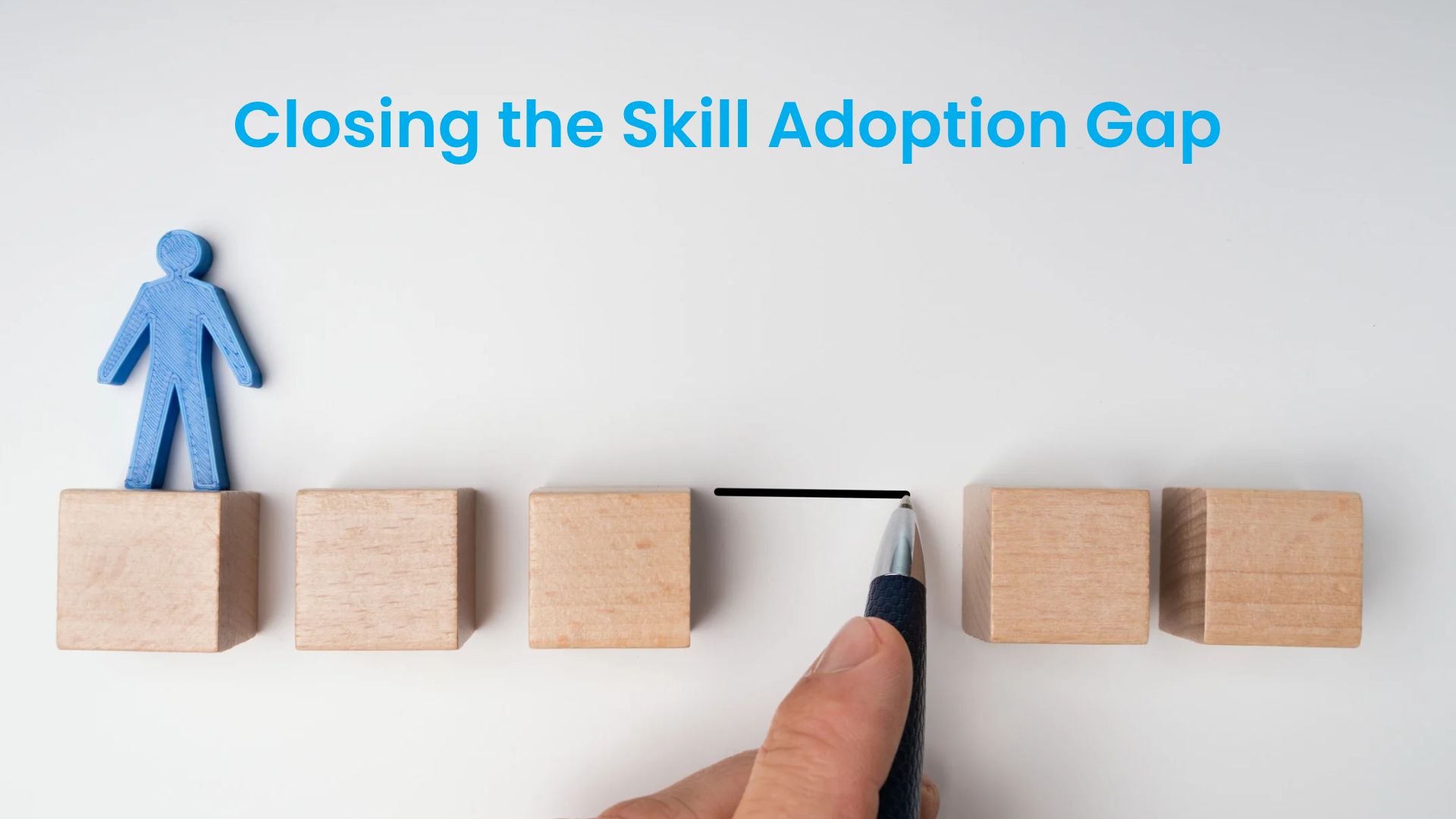
The sales skill adoption gap is the distance between what sellers know after training and what they actually do with real buyers.
Skill development happens on three levels:
- Know it. The seller attended training and understands the methodology.
- Show it. The seller can demonstrate the skill in a role-play or simulation.
- Do it. The seller uses the skill on a live call, with a real buyer, under real pressure.
Most training programs stop measuring at attendance and knowledge. Stronger programs add role-play. The business value sits at level three, and historically it has been the hardest to measure.
Why Your Scorecard Can't Diagnose the Problem
Quota attainment, win rates, and pipeline report outcomes. They blend seller skill with territory quality, lead flow, account mix, and luck.
That blend hides real costs. Some sellers win by working the environment. They negotiate better accounts into their territory, collect more leads from a manager who favors them, or offload tough accounts to peers. Quotas stay flat while potential shifts.
Two sellers can miss quota by 20% for completely different reasons. One struggles with discovery. The other can't secure clear next steps. When a seller on your team struggles, can you name the specific skill holding them back.
Technology Turns Selling into a Measurable Discipline
Look at elite swimming. Fifty years ago, a champion had a swimsuit, a stopwatch, and a coach's gut feel. Today, athletes train with underwater cameras, wearables, biomechanical analysis, sports psychologists, and fully personalized programs.
Most sales teams still train like it's a 1970s swim meet.
Technology alone won't close the gap. Your competitors likely own the same CRM, conversation intelligence, and AI tools. Your edge comes from how well your people use them.
Today, AI can turn an unstructured sales conversation into usable insight. Conversation intelligence tools record calls, summarize them, and score how each seller uses specific skills.
How to Combine Technology and Training
🔹Baseline before you train
Measure each seller's skills in real buyer conversations before training, reassess right after, and keep tracking. You need adoption before you get value.
🔹Find the one skill costing each seller the most
Spend 30 to 45 minutes per seller each quarter. Listen to two recent discovery calls and score five skills as yes or no:
- Did they set an agenda?
- Did they uncover the real problem?
- Did they explore business impact?
- Did they learn the decision process?
- Did they establish clear next steps?
Pick the single skill that was missing when it mattered most. Ask the seller where they think they lose traction. If you agree, keep going. If you don't, that's your first coaching conversation.
🔹Coach the seller behind the deal
When a manager rescues a stalled deal in the last week of the quarter, the seller learns to call the manager next time. How many deals did your managers rescue last quarter, and what did those sellers learn?
Make feedback specific: "At minute 12, the buyer mentioned budget pressure, and you went straight to the demo. Next time, ask one more question about business impact first."
Structure each coaching conversation in three steps. The seller assesses their own call. You give feedback on one behavior. The seller commits to an if-then plan: "If the buyer asks about price before we've covered impact, then I'll ask what the problem is costing them."
🔹Ask better questions in pipeline reviews
Swap "What stage is this in?" for "What did the buyer say or does that prove it moved?" Swap "When will it close?" for "What do we still not know?" Start with the weakest opportunities. Recognize sellers who disqualify poor-fit deals. And keep forecasting meetings separate from skill coaching, because the forecast will always win the airtime.
🔹Track one skill and tie it to revenue per rep
For 10 weeks, review two calls per seller each week and mark whether the target skill showed up when it should have. Small teams can do this by hand. Larger teams need technology to measure skills at scale. Then connect adoption to revenue per rep, which ties to business results more directly than win rate.
Fix the Environment That Undercuts Adoption
Every sales culture teaches something. Check whether yours reinforces the behaviors you paid to train.
- Recognition. When someone lands a big deal, do you ask how they won? If not, luck and skill look identical.
- Disqualification. Do you reward sellers who walk away from bad-fit opportunities, or question why they couldn't make it work
- One-on-ones. Look at your last five. How much time went to skills versus deals?
- Your own scorecard. If you're measured only on quarterly revenue, you'll spend most of your time managing deals.
A global logistics provider saw the payoff. Before training, only 2% of its opportunities were disqualified. Sellers chased almost everything. After training focused on discovery and qualification, disqualified opportunities rose to 16.5%. In the same period, the overall win rate climbed from 10.7% to 25.1%.
Start with a Baseline
A baseline sorts your team into four groups.
Role models use the skills and hit their numbers, so expand their toolkit. Rogue achievers hit their numbers without the skills, so examine their environment. Rule followers use the skills without results, so increase coaching. At-risk performers do neither, so have a fit conversation.
Frequently Asked Questions
Why doesn't sales training change seller behavior?
Sellers often learn the skills but revert to old habits under the pressure of real deals. In Sandler client testing, skill scores rose from 44 to 80+ in role-play after training, then fell to 46 on live buyer calls. Lasting change requires reinforcement, specific feedback, and accountability after training ends.
How do you measure the ROI of sales training?
Baseline each seller's skills in real buyer conversations, reassess after training, and track adoption over time. Then connect adoption to revenue per rep, which ties more directly to business results than win rate.
How long does it take a salesperson to adopt a new skill?
Plan on 10 to 12 weeks per skill, focusing on one skill at a time. Sellers move from learning the concept, to applying it, to applying it in a way that fits their personality. Treat skill development as ongoing.
💡Close the Gap at Your Company
Training is an investment. Adoption is where it pays off. Sandler by Praxis Growth Advisors helps CEOs, business owners, and sales leaders across Greater Boston and Massachusetts baseline their team's skills, coach to the gaps that cost them revenue, and track the results.
Find out where your team's skills actually stand.
Contact Sandler by Praxis Growth Advisors to schedule a conversation.