

Master Tone, Body Language, and Behavioral Style
Salespeople spend hours perfecting their pitch. They rehearse responses to objections, fine-tune their value proposition, and choose their words carefully. Then they wonder why prospects still go cold.
Here's the uncomfortable truth: in most sales conversations, your words matter far less than you think. What your prospect is actually reading, consciously or not, is how you show up. Your tone. Your posture. Your energy. The confidence (or anxiety) behind what you say.
Master those, and your words almost take care of themselves.
🔷 What Is a Pattern Interrupt in Sales — and Why Does It Work?
Prospects have been on enough sales calls to know exactly what's coming. The warm opener. The qualifying questions. The pivot to a demo. The ask. They've developed a kind of immunity to it.
Pattern interrupts cut through that.
A pattern interrupt is a deliberate break from what a prospect expects a salesperson to do — one that's disarming rather than aggressive. It works because it signals that you're not like every other rep who's called this week. The key is that it has to feel genuine, because it is.
A few examples that actually work:
I want to be upfront — I'm not sure this is a fit yet." Said early in a call with calm confidence, this resets the dynamic entirely. You're no longer selling; you're evaluating together.
"You seemed a little hesitant when we scheduled this. Totally fair. What's your honest take so far?" Naming the hesitation before the prospect brings it up removes the elephant from the room and builds immediate credibility.
"I could give you our standard overview, or we could skip straight to whatever's actually on your mind. Your call." Giving the prospect control creates trust faster than any amount of prepared content.
Tone is everything here. Said with a pushy edge, these land wrong. Said with genuine ease, they open doors that a perfect pitch never could.
🔷 The Nonverbal Communication Signals Your Prospects Are Reading
Whether you're in person, on a video call, or even on the phone, your nonverbal communication is always transmitting.
Prospects pick up on signals you may not even realize you're sending.
Posture and presence signal confidence or uncertainty before you say a word. Sitting forward, making eye contact (or looking into the camera on video), and staying physically relaxed communicates that you belong in the conversation.
Vocal tone shapes meaning as much as content does. The same sentence — "That's an interesting concern" — can sound genuinely curious or quietly dismissive depending on delivery. Practice hearing yourself.
Pacing and silence are underused tools. Rushing through a response signals nerves. A deliberate pause before answering signals composure.
Phone calls aren't exempt. Salespeople who stand up during calls, smile while speaking, and treat phone conversations with the same intentionality as in-person meetings consistently outperform those who don't.
🔷 How to Adapt Your Sales Communication Style Using DISC
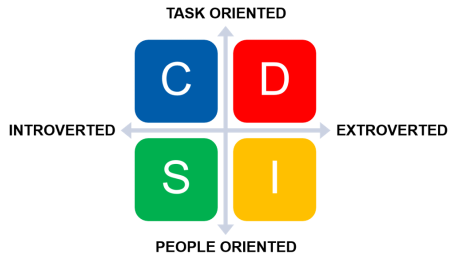 Even when your delivery is on point, you can still miss the mark if your communication style doesn't match your prospect's. The DISC model is one of the most practical tools for closing that gap.
DISC identifies four behavioral styles — Dominant, Influential, Steady, and Conscientious — and understanding them helps salespeople connect faster, reduce friction, and move deals forward more naturally.
D — Dominant: Your prospect gets right to it, talks fast, and doesn't love small talk. They want the bottom line.
- Adjust by: Leading with outcomes, not process. Skip the preamble. "Here's what other companies like yours have seen — and here's how we get there." Let them drive.
I — Influential: They're warm, energetic, and want to feel good about the people they work with. The relationship matters as much as the result.
- Adjust by: Matching their energy. Share a story or two. Ask about their team, their wins, what they're excited about. Don't rush to business.
S — Steady: They're thoughtful, measured, and value trust over speed. They won't be rushed into anything and they'll disengage if you try.
- Adjust by: Slowing down. Be genuine. Check in on their comfort level. "I want to make sure this makes sense for your situation before we go any further."
C — Conscientious: They've done their research. They have detailed questions and want data, process, and proof before they move.
- Adjust by: Coming prepared with specifics. Don't oversell. Walk them through the logic. Give them space to analyze and follow up.
The first step is understanding your own default DISC style because under pressure, most people over-rely on it. Awareness is what builds the flexibility to adapt.
🔷 Putting It Together
Better sales conversations don't come from better scripts. They come from better presence, the ability to read a room, disrupt expectations when needed, and communicate in the style that actually lands with the person across from you.
These aren't personality traits. They're learnable skills. And like any skill, they sharpen with practice, feedback, and the right coaching.
If you want to see how your team shows up across these dimensions, a DISC assessment is a strong starting point. It provides a clear picture of each person's natural style and helps to identify the style of others.
💡Frequently Asked Questions
What is a pattern interrupt in sales?
A pattern interrupt is a deliberate, unexpected move that breaks a prospect's assumptions about how a sales conversation will go. Used well, it disarms defensiveness and creates space for a more honest dialogue.
Why does nonverbal communication matter in sales?
Prospects form impressions quickly — and much of that impression comes from tone, posture, and energy rather than the content of what's said. A salesperson who communicates confidence and genuine curiosity nonverbally will outperform one who relies on a polished script alone.
What is the DISC model and how is it used in sales?
DISC is a behavioral framework that identifies four communication styles: Dominant, Influential, Steady, and Conscientious. In sales, it helps reps recognize how a prospect prefers to communicate and adapt their approach accordingly — reducing friction and building rapport faster.
How do I know my own DISC style?
A DISC assessment takes about 15 minutes and gives you a detailed profile of your behavioral tendencies, strengths, and areas to develop.
How can Boston-area sales teams improve communication skills?
Sandler by Praxis works with companies throughout Massachusetts to improve communication skills from nonverbal presence to DISC-based adaptability.
Eric Warner | Sandler by Praxis Growth Advisors Inc. | Boston, MA