The Psychology of the Stall
In the competitive corridors of Boston and across the Massachusetts business landscape, the difference between a record-breaking quarter and a revenue plateau often comes down to one factor: how your team handles resistance.
Most sellers view stalls as obstacles to avoid. High-performing sales pros view them as data points to be leveraged.
Too many leaders are settling for teams that "gather info and present" rather than teams that "co-author and close." If your sales force is struggling with stalls and objections, there’s a tactical execution problem.
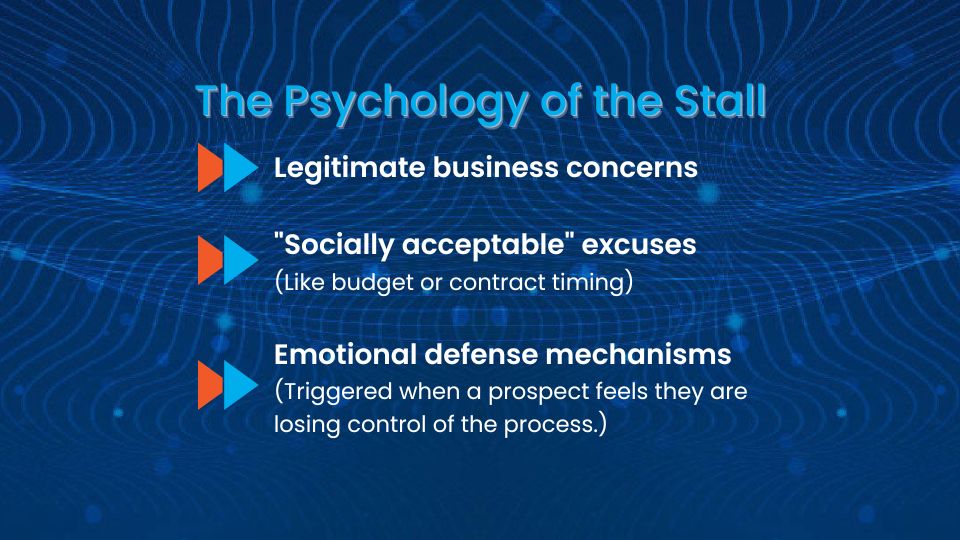
🔷 The Psychology of the Stall
Before your team can master eliminating prospect stalls and objections, they must understand why they occur.
Objections typically fall into three categories:
- Legitimate business concerns
- "Socially acceptable" excuses (like budget or contract timing)
- Emotional defense mechanisms triggered when a prospect feels they are losing control of the process.
To move the needle on revenue, sellers must stop reacting to these stalls and start preempting them.
🔷 Strategy 1: Proactive Objection Handling
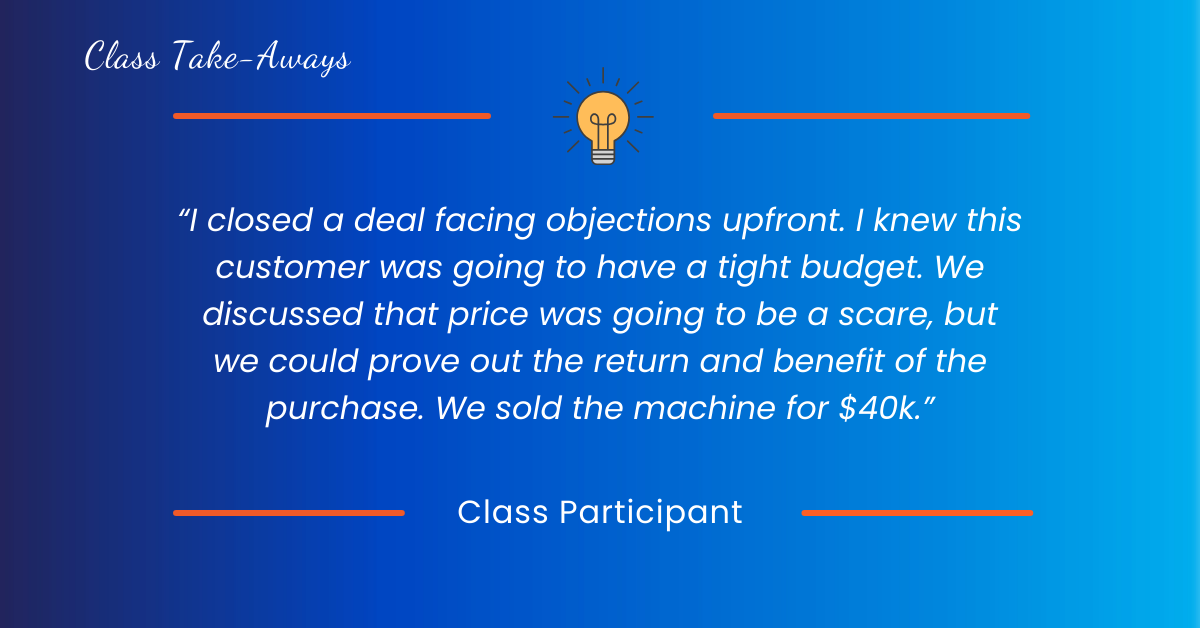
The most effective way to handle a roadblock is to hit it before the prospect does.
This involves addressing potential gaps early to build transparency and test the prospect’s true commitment.
- Tactical Execution: Instead of hiding a product limitation, address it head-on: "The only gap we have is X. Would it be okay if we showed you our roadmap for that?"
This vulnerability builds trust and forces the prospect to reveal if that "gap" is a deal-breaker or a manageable hurdle.
🔷 Strategy 2: The Negative Reverse (Pull, Push, Pull)
When a prospect digs in their heels, such as resisting the inclusion of other stakeholders (multi-threading pushback), most reps push back harder.
This is a mistake. Effective sales management training teaches the "Pull, Push, Pull" technique to break through resistance.
- Pull: Validate their "no" to disarm them. "It sounds like you've decided it would be a waste of time for me to talk to the CFO."
- Push: Briefly suggest the alternative value. "Usually, including them early helps uncover financial questions that might stall us later.”
- Pull: Validate the "no" again, forcing the prospect to justify why they should move forward. "But it sounds like those aren't steps you're interested in taking right now."
This is high-risk, high-reward. If the prospect agrees with the "no," sellers must be prepared to walk away from a deal that was likely never going to close anyway.
🔷Strategy 3: Tactical Vulnerability to Reset Stalled Deals
No response is a common silent killer of deals. When a prospect disappears, your team needs a "Not Okay" reset.
- The "Not Okay" Tactic: This uses vulnerability to get a prospect to explain unexpected changes. “I’m confused. It feels like something has changed here. Help me understand what happened?" Often this yields the honest feedback required to either revive the deal or kill it quickly.
🔷Strategy 4: Co-Authoring the Solution
The goal of top-tier sales performance is to move from being a vendor to a co-author. Instead of presenting a pre-packaged answer to an objection like "vendor preference" or "status quo," your team should involve the prospect in the solution design.
If a prospect raises a concern about implementation, don't just give them a brochure. Ask: "If you were to move forward with us, how would you change that process to ensure success?" When the prospect designs the solution, they own the outcome.
🔷The Executive Mandate
For CEOs and Sales VPs in Massachusetts, the status quo is the enemy of growth. If your team is waiting for "perfect" leads that don't object, you are leaving millions on the table.
Eliminating prospect stalls and objections requires a shift from defensive selling to tactical, strategic engagement. By training your team to foreshadow risks, you ensure that pipelines are built on commitment, not just conversation.
To scale your revenue and transform your sales culture, you need more than a seminar. You need a strategic overhaul. If you're ready to implement these high-level tactics across your organization, let’s discuss how sales training can deliver the discipline your team lacks.