How Sales Managers Build Accountability Without Micromanaging
Monday's sales meeting goes well.
The team reviews the pipeline, discusses opportunities, and agrees on the prospecting and follow-up activities needed to move business forward.
Everyone leaves with a plan.
By Friday, several commitments haven't happened.
The manager is frustrated. The reps have explanations. And next Monday, the same conversation begins again.
Sound familiar?
Before assuming the problem is motivation, sales leaders should examine how accountability is established and reinforced.
Agreement Isn't the Same as Commitment
A salesperson saying, "I'll make more calls this week," may sound like a commitment. But what does "more" actually mean?
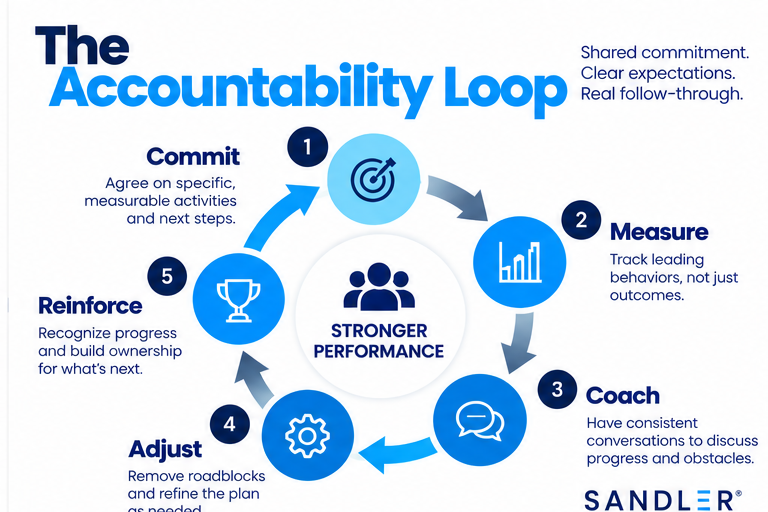
Effective accountability starts with specific, measurable behaviors.
How many prospecting conversations? How many follow-up attempts? How many qualified next steps?
The manager and salesperson should agree on the activities, expectations, and timeline.
Just as importantly, the salesperson needs to understand how those behaviors connect to their goals.
Measure the Behaviors That Create Results
Revenue is a lagging indicator. By the time a sales manager sees a missed revenue target, the activities that contributed to it may have happened weeks earlier.
Behavior scorecards provide visibility into leading indicators such as prospecting activity, discovery conversations, and agreed-upon next steps.
But a scorecard alone doesn't create accountability.
It's what the manager does with that information that matters.
Coach Instead of Chase
When a rep misses a commitment, the natural reaction may be to ask, "Why didn't you do what you said you would?"
That question can quickly put someone on the defensive.
A coaching conversation takes a different approach:
"What prevented you from completing the activity?"
"What did you prioritize instead?"
"What adjustment will help you follow through next week?"
These questions encourage the salesperson to diagnose the gap and take responsibility for the next step.
Make Accountability Mutual
Accountability is a two-way commitment.
Salespeople are responsible for executing agreed-upon behaviors. Managers are responsible for providing coaching, removing reasonable obstacles, and following through on their own commitments.
A consistent coaching cadence helps both sides recognize progress and address problems before they compound.
The goal isn't to eliminate every missed commitment. It's to create a process where missed commitments lead to learning, adjustment, and stronger ownership.
Heather's Gem:
"Accountability isn't about catching people doing something wrong. It's about helping them do what they said they wanted to do."
The Bottom Line
If your sales team repeatedly agrees to a plan but struggles to execute it, consider whether your accountability process is building ownership or simply creating more oversight.
Because predictable sales performance requires more than a plan. It requires consistent follow-through.
Ready to strengthen your team's accountability and coaching practices?