
You Set the Revenue Goal. Now What's the Plan?
Your sales team has a $1 million revenue target.
Everyone knows the number. It's in the forecast, on the dashboard, and probably discussed in every pipeline meeting.
But here's a question worth asking:
Can every salesperson explain which daily and weekly activities will produce that revenue?
If not, you may have established the destination without giving your team a workable route to get there.
Start With the Math
Let's say your team's annual revenue goal is $1 million, and your average deal size is $50,000.
You need 20 closed deals.
If your team closes 25% of qualified opportunities, you'll need approximately 80 qualified opportunities to produce those 20 deals.
Now consider your discovery conversations. If one in four meaningful buyer conversations becomes a qualified opportunity, you'll need 320 conversations.
That's roughly 27 meaningful conversations per month.
But we're not finished.
How many prospecting calls, referrals, introductions, and outreach activities does it take to generate those conversations?
That's where the behavior plan begins.
Leading Indicators Tell You What's Happening Before Revenue Arrives
Revenue is a lagging indicator. It tells you what has already happened.
Prospecting activities, buyer conversations, and qualified opportunities are leading indicators. They give managers an earlier view into whether the team is on track.
A salesperson may be making plenty of calls but struggling to secure meaningful conversations.
Another may be having conversations but failing to uncover enough pain to create qualified opportunities.
Those are different coaching problems.
Without understanding conversion ratios, a manager may simply tell both salespeople to increase activity.
That doesn't address the actual gap.
Behavior Plans Create Better Coaching Conversations
In the Sandler approach, behavior planning means identifying the actions required to achieve a goal, establishing measurable commitments, and reviewing progress consistently.
Instead of asking only, "Are you going to hit your number?" a sales manager can ask:
How many meaningful conversations did you plan for this week?
How many did you actually have?
Where are opportunities getting stuck?
Which conversion ratio needs attention?
What behavior will you adjust next week?
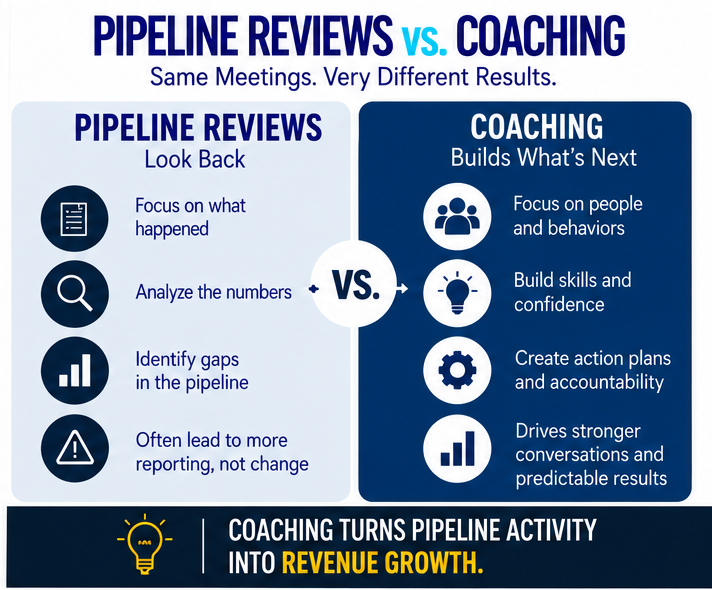
These questions create opportunities for coaching before a missed target becomes a missed quarter.
The Goal Is the Destination. The Behaviors Are the Plan.
Revenue goals matter. They establish expectations and direction.
But a goal without a behavior plan leaves too much to chance.
When salespeople understand their numbers, they can take greater ownership of their performance. Managers can reinforce effective behaviors and coach specific gaps.
As I often say:
"You can't manage the number. You can manage the behaviors that create the number."
Here's a question for your next sales meeting:
If you took away the revenue dashboard, could your team still explain how they're going to reach the goal?