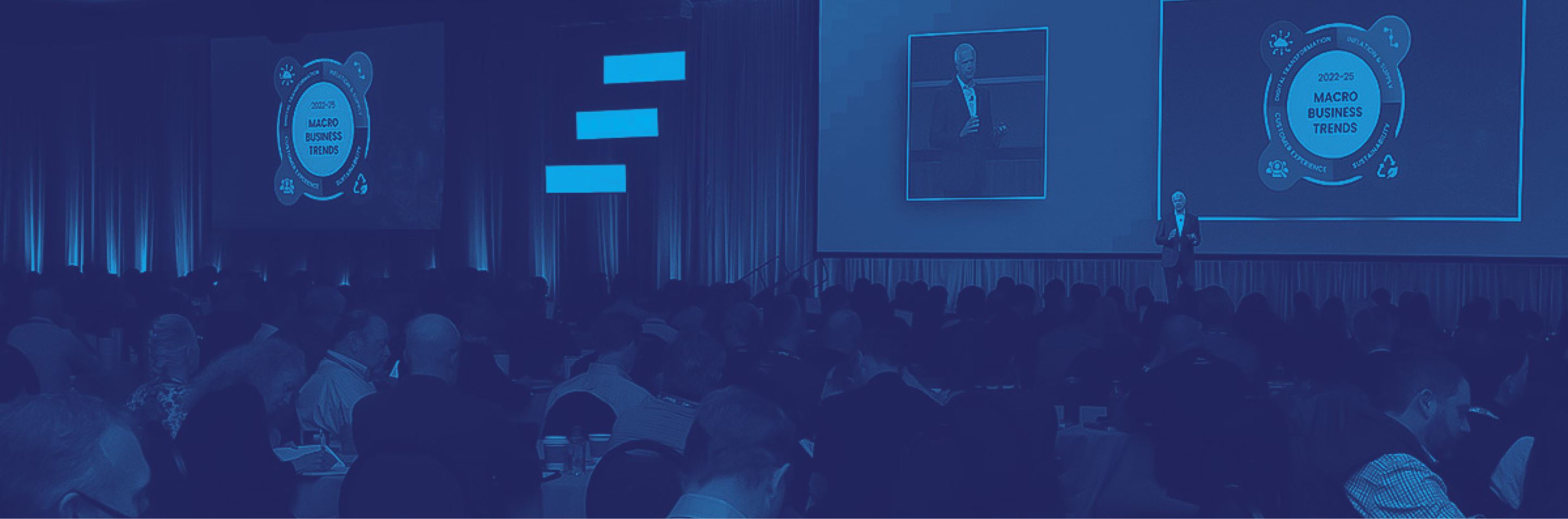
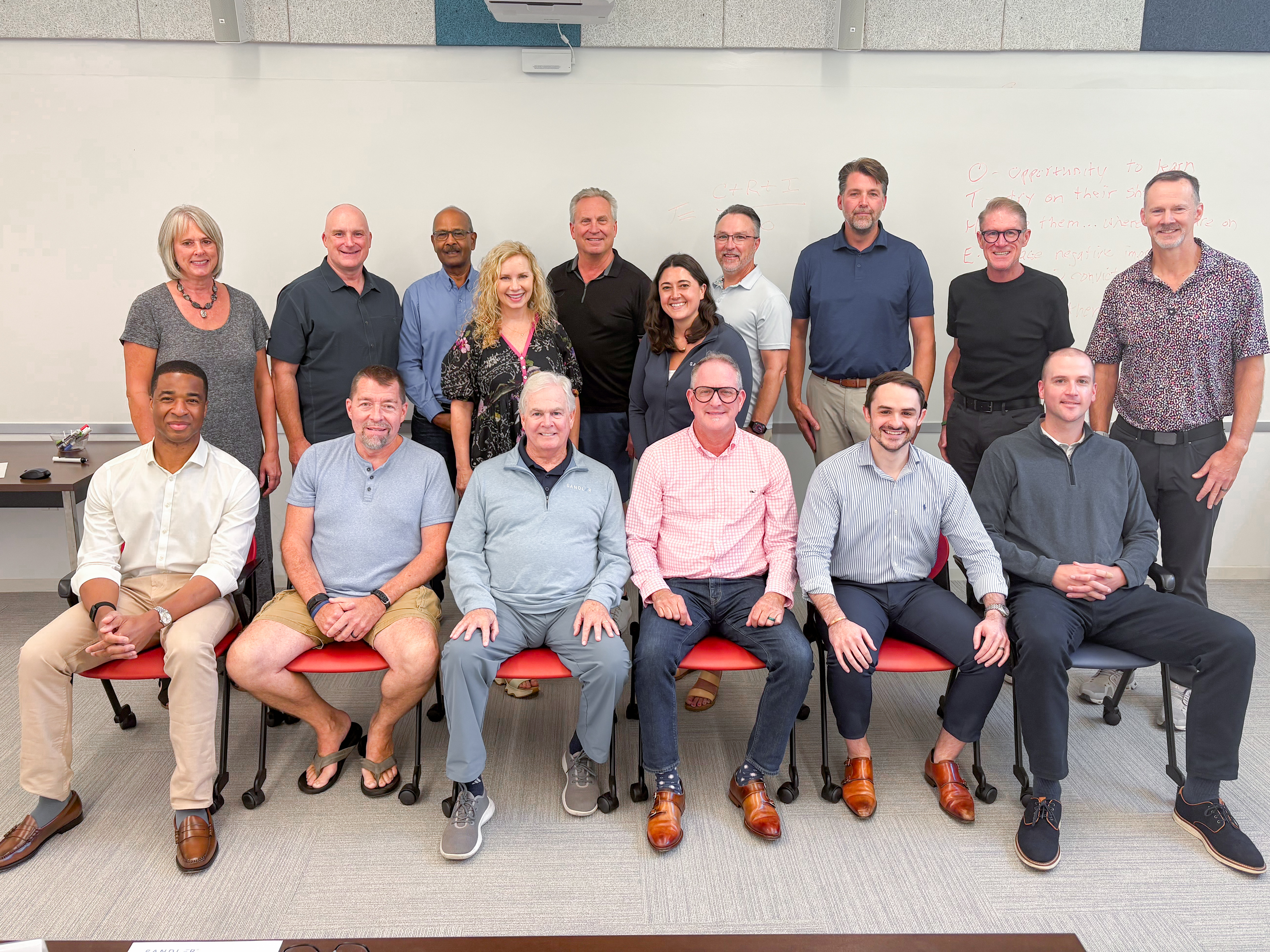
Last week I spent some time with my fellow business owners down in Omaha, Nebraska.
This was a great couple of days where we could learn from each other, learn about how to better service our customers, share our experiences on what works and what isn’t so we can continuously improve our service, ourselves, and our business.
I appreciate the guidance of my fellow business owners in sharing their strategies, approaches, talk tracks, and too many specific details to mention.
Organizing your own support network can be grouped into a few different primary buckets, and while each of these buckets can overlap, none of them can be overlooked.
- Business Best Practices
- Peer Accountability
- Mentor
- Personal and Emotional Support
- Professional Advice
- Introduction Networks
Let’s dive into each of these.
1. Business Best Practices
You don't have to invent everything from scratch.
Somebody has already figured out how to onboard a new hire, run a pipeline review, or price a service without leaving money on the table. For me, that's the Sandler system and the franchise network. When a sales team is stuck, I don't guess. I go to a proven process like the Up-Front Contract or a disciplined pipeline review.
Your version might be an industry association, a trade group, or a franchise playbook. The question to ask is "Where do I go to find out what already works?"
2. Peer Accountability
Peers are people at your level, facing your problems, and who will ask the tough behavioural question: "Did you do what you said you'd do?"
Think of a monthly call with two or three other owners where everyone shares one commitment and reports back on last month's. It's amazing how much gets done when someone is going to ask about it. The Omaha trip was a good reminder that peers also save you from repeating their mistakes.
3. Mentor
A mentor is someone who has been where you're trying to go.
They don't need to be in your industry, but they do need to be a few steps ahead. A mentor helps you see around corners: "Here's what happens when you scale past ten employees," or "I wish I'd said no to that client sooner."
Peers tell you what's working now. A mentor tells you what happens next.
4. Personal and Emotional Support
This is the bucket most owners skip, and it's the one that keeps everything else standing.
It's a spouse, a close friend, a family member, a faith community, or a therapist. It's the person you can call after a rough week without having to put on the "I've got it all together" face. Leading a company can be lonely, and the pressure doesn't stay at the office. If this bucket is empty, the others will eventually feel the strain.
5. Professional Advice
You don't need to be your own lawyer, accountant, or marketing department.
Although, AI can do quite a bit in these ‘administration’ side of these areas, nothing beats a team of real people that understand your situation. Examples include:
- Legal: a lawyer who reviews your contracts before a dispute, not after
- Accounting and Finance: a CPA or bookkeeper who tells you what the numbers mean, not just what they are
- Marketing: someone who can tell you whether your message is landing
- Sales: an outside set of eyes on your process, because it's hard to see your own blind spots
The key is to build these relationships before you need them. Finding a good lawyer in the middle of a crisis is a lot harder than calling one you already trust.
6. Introduction Networks
Sooner or later, growth comes down to who knows you and who trusts you enough to open a door.
This bucket includes your chamber of commerce, referral groups, professional associations, and the relationships that lead to "You should really talk to..." conversations.
The goal isn't collecting business cards. It's becoming known as someone who helps others, so introductions flow both ways.
Time for a Check-Up
Here's my challenge: write the six buckets on a page and put a name next to each one. If you can't name someone, you've found a gap. If one person fills three buckets, that's a risk. No single person can carry all six, and none of us should try.
Fill the empty buckets first.
ASK Sandler works with driven organizations in Manitoba to help them grow their people, grow their business, and grow themselves.
If you want to build stronger beliefs and behaviours inside your sales team, come be our guest in a class or book a 15-minute chat.