

After every Sandler Minnesota training session, participants answer three questions: What did I learn? What will I start doing? What will I stop doing? Since September 2024, 1,195 salespeople, sales leaders and business owners from more than 150 companies have answered. Their answers show which sales habits to break first, and 96% named a specific habit they want to stop.
What sales habits should salespeople break? The sales habits to break first are presenting before you understand the problem, talking too much, assuming you know who decides, accepting vague answers, sending proposals and hoping, ending calls without a next step and putting off prospecting. Most come from one root habit: telling instead of asking.
Key takeaways
- 96% of participants named a specific sales habit they want to stop.
- 26% want to stop telling instead of asking: presenting early, talking too much and assuming.
- 21% named head trash, fear or avoidance as the habit holding them back.
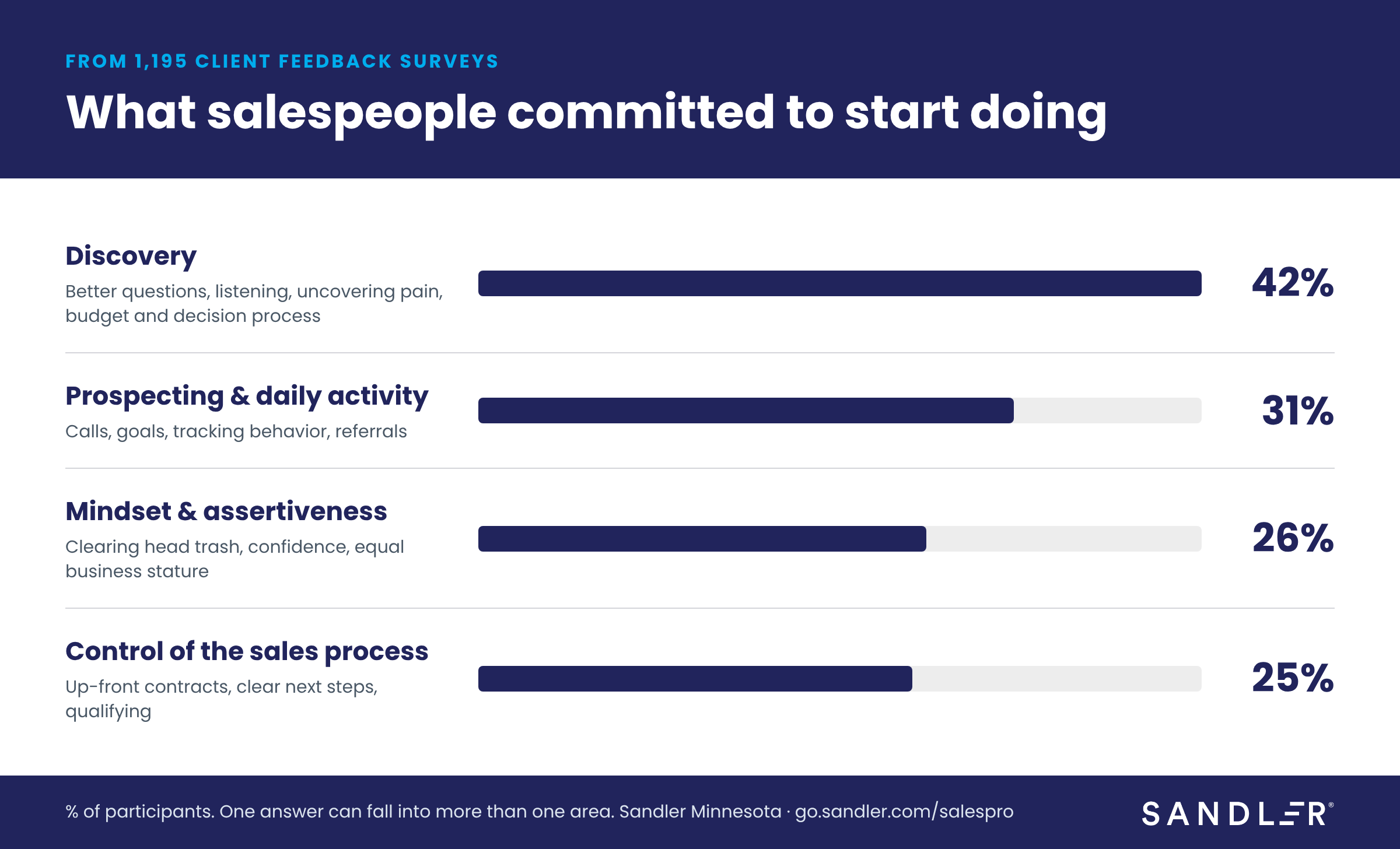
- 42% committed to stronger discovery: better questions, more listening and finding the real problem.
- Each habit has a simple, specific fix you can use on your next call.
Why do salespeople tell instead of ask?
Most salespeople were hired because they know the product. When a buyer says "tell me what you do," they tell them. Everything.
The habit is common. Gong's analysis of 326,000 sales calls found that reps talk 60% of the time on average. Low performers talk 64% of the time on the deals they lose.
The cost is real. You pitch to a problem the buyer doesn't care about. Your price gets compared to someone else's. And the meeting ends with "let me think it over."
The 7 sales habits to break (and the fix for each)
1. Presenting too early
"Avoid temptation to offer a solution right away." — Private Training participant, manufacturing
The fix: Don't open the slides until you've asked four or five questions. Todd Thiewes explains why in Don't Spill Your Candy in the Lobby.
2. Talking too much
"I will stop answering questions so quickly and embrace the awkward silence." — Sales Mastery participant, business technology
The fix: Let the silence sit. The buyer should do most of the talking.
3. Assuming you know who decides
"Assuming I know who the decision maker is." — Division Manager, home products
The fix: Ask, "Besides you, who else will weigh in on this?" It takes ten seconds and saves weeks.
4. Accepting vague answers
"Accepting wishy washy answers." — Foundations participant, engineering and manufacturing
The fix: When a buyer says "soon," ask what soon means. Answering a question with a question is a core Sandler skill; see Mastering the Art of Reversing in Sales.
5. Quoting and hoping
"I will stop sending proposals and hoping. Have review meetings and set expectations." — Foundations participant, industrial automation
The fix: Book the review meeting before you send the proposal. More in A Proposal: To Send or Not to Send?
6. Ending calls without a next step
"Leaving deals in the unknown instead of setting a next step." — Account Executive, business technology
The fix: Lock in the next meeting before this one ends. An up-front contract makes that easy; our clients say it's the lesson that sticks.
7. Getting ready to get ready
"I will stop getting ready to get ready." — Sales Mastery participant, business technology
The fix: Block prospecting time on your calendar and track what you actually do. As one of our posts puts it, you don't have to like prospecting, you just have to do it.
How does head trash keep bad sales habits in place?
21% of participants said the habit they need to break isn't a skill. It's head trash: the beliefs that stop salespeople from doing what they already know they should.
Head trash is why a rep who knows to ask about budget doesn't. It's why they present early. Telling feels safer than asking a question they might not like the answer to.
To catch it sooner, read Catching Negative Thinking Fast.
What should salespeople start doing instead?
We also asked what participants will start doing. Here's how their answers group:
|
|---|
How do you break a sales habit for good?
A habit changes when someone decides to change it, writes it down and practices it. That's why we ask the start and stop questions after every session.
One session rarely does it. Most habits stick through weekly practice and coaching. That's the purpose of Sandler Reinforcement Services.
Frequently asked questions
What is the most common bad habit in sales? In our data, it's telling instead of asking. 26% of 1,195 participants want to stop presenting early, talking too much or assuming they know what the buyer needs.
Why do salespeople present too early? They know the product well and want to show value fast. But presenting before you understand the problem means pitching to a guess.
How much should a salesperson talk on a sales call? Less than the buyer. Gong's research found the average rep talks 60% of the time, and low performers talk even more on deals they lose.
What is head trash in sales? Head trash is a Sandler term for beliefs that hold salespeople back, such as fear of hearing no or needing to be liked.
How long does it take to break a sales habit? It depends on practice. Habits change faster with a written commitment and regular reinforcement than with one training session.
See what your team would write
Want to know which habits are holding your team back? Crash a Class for free, or book a 20-minute conversation with Sandler Minnesota at (952) 300-0906 or go.sandler.com/salespro.

.png)