We sat down with brokerage and 3PL sales leaders for the Logistics and Freight Growth Playbook, and the words kept changing but the story didn't. "We covered a load for a shipper who just wanted a number to squeeze their incumbent." "Our reps spend half the week on cold calls, and the book that actually pays came from about three relationships." "Every account we won on rate walks the day somebody quotes lower."
For a long stretch, coverage and a competitive rate were enough to hold freight. That cover is thinner now. Every brokerage, 3PL, and carrier can quote a lane, rate shopping is instant, and loyalty lasts exactly until the next rate war. Meanwhile the math has not changed: it can take up to a thousand cold calls to book a single new shipper, and most of your revenue this year will come from accounts you already have.
The damage from standing still isn't one lost account. It's spread across the whole book, hidden behind a busy phone floor. Margin gets shaved the moment a shipper hesitates, points per load you cannot earn back. Freight won purely on price leaves the day a cheaper broker calls, taking the relationship with it. Lanes and modes get handed to another provider by a shipper you already serve. And the book runs on the spot market because referrals were never systematically asked for.
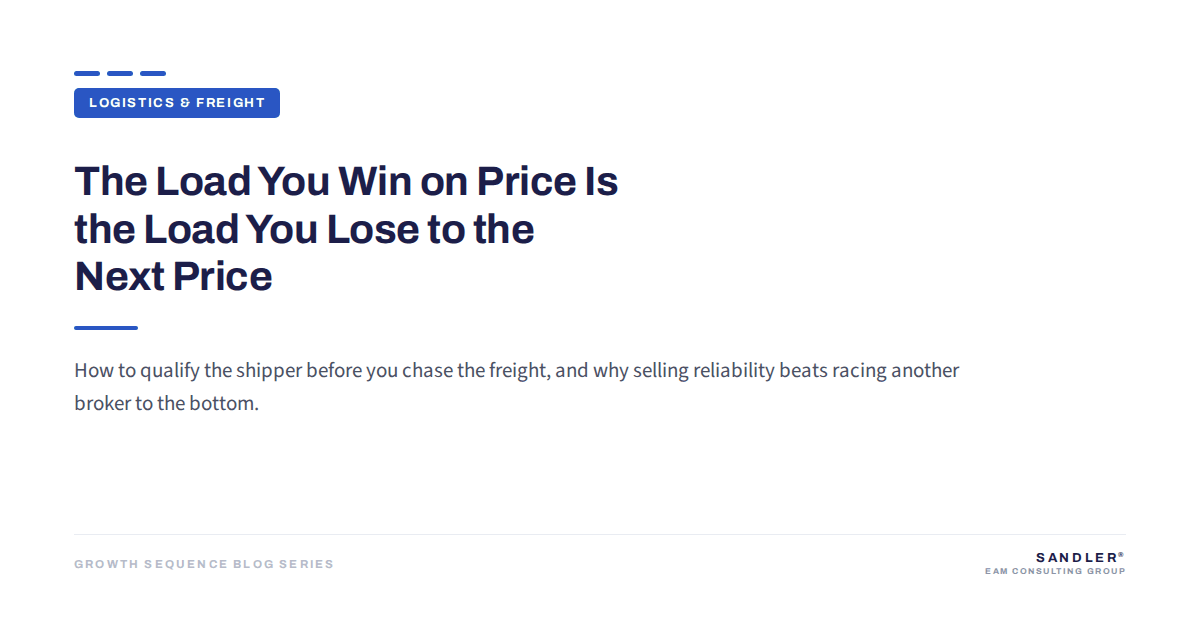
The fix isn't a lower rate. It's three shifts. First, qualify the shipper before you chase the freight. Get the real pain with their incumbent and whether you can actually fix it, the budget and who controls it, and the decision process: who decides, by when, against what criteria. A shipper who only wants a number to leverage someone else is not an opportunity, and walking away from that is itself a growth strategy.
Second, find the cost of the status quo underneath the rate request. Beneath a request to beat a number sit missed pickups, tender rejections, capital tied up in slow transit, and their own customers calling to complain. Ask what happens when a load falls through, what a late delivery costs downstream, and what their incumbent keeps getting wrong. Then sell reliability and total landed cost instead of the line-haul number. "Let us talk about what a missed pickup actually costs you" is a complete, comfortable sentence.
Third, work the account you already have and activate the people already talking to it. A shipper who trusts you with van freight also moves LTL, reefer, and the occasional container, and may need warehousing or drayage. Map every active shipper against your full menu of lanes, modes, and services, because the gaps are freight you already earned the right to ask for. Your dispatchers and account managers hear the openings daily. When a shipper says their reefer carrier keeps missing pickups, that is not a complaint, it is a lane.
None of this asks a rep to stop quoting competitively. It asks for one habit at a time. The team that leads with rate and goes quiet between loads is competing on the one thing any competitor can match tomorrow. The team that qualifies first, prices against the real cost, and expands the accounts it already earned stops living load to load.
Every lane you won on rate alone this quarter is a lane someone else can win the same way. They only have to be a nickel cheaper.