We sat down with catering, events, and group sales teams for the Hotel Events Growth Playbook, and the words kept changing but the story didn't. "We build a full proposal for every RFP, even the ones where the planner never had a real budget." "Tentative holds just sit there until they expire. Nobody's actively working them." "The minimum gets discounted before the planner even brings up price, because we assume they will."
For a long stretch, a strong ballroom and a competitive rate did most of the selling. That cover is thinner now. Planners run three-venue RFPs as a matter of habit, compare food and beverage minimums line by line, and the properties still winning the booking are the ones whose sales teams qualified the opportunity and stayed engaged with the hold, not the ones with the lowest number on the proposal.
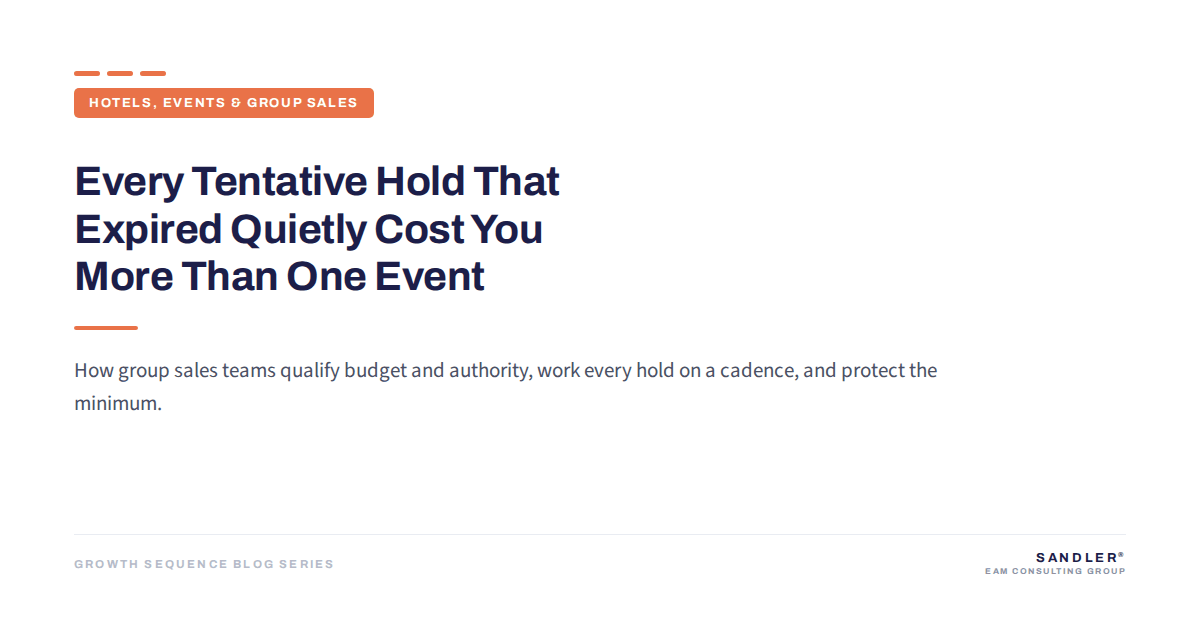
The damage from standing still isn't one lost wedding or one lost conference. It's spread across the whole calendar, hidden below the surface of a full inbox. Proposal hours go into RFPs that were never going to book, because nobody asked about budget or decision authority before building the full package. Tentative holds sit untouched with no follow-up cadence until the release date arrives and the space is already gone. And minimums get discounted in the very first proposal, before the planner ever raises price as a concern.
The fix isn't a lower rate. It's three shifts. First, qualify before you build the proposal. An RFP with no real budget range and no clarity on who actually decides is hours spent on detailed BEOs and pricing for an event that was never going to book here. A short call up front about budget, date flexibility, and decision authority saves the proposal hours for the inquiries that can actually close.
Second, treat a tentative hold as an open opportunity, not a placeholder. A hold with no agreed follow-up cadence and no real decision date drifts until it quietly expires. Setting a specific check-in schedule at the moment the hold goes in either converts it or releases the space early enough to sell it again.
Third, never discount the minimum before the planner objects. A sales manager who assumes price resistance and lowers the number in the initial proposal gives away margin to an objection that was never actually raised. Presenting the proposal once, at full value, and letting the planner make the first move keeps the negotiation honest.
None of this is about chasing more leads with the same process. It's about recognizing that planners changed how they shop a venue before most sales teams changed how they sell one. The property that keeps proposing blind and letting holds drift is competing on the one thing it controls least. The property that qualifies first, actively manages every hold, and protects the minimum stops needing the next inquiry to save the quarter.
Every tentative hold that expired quietly this month didn't just lose one event. It told the planner exactly how easy it is to book somewhere else.