The #1 Reason Most Pipeline Meetings Fail
Sales leaders spend countless hours in pipeline reviews, then end those meetings with the same questions they had when they walked in:
Which opportunities are real?
Which deals are at risk?
And how accurate is the forecast?
Sound familiar? You’re not alone. Forecast accuracy remains one of the biggest challenges facing sales leaders today.
In my experience, the problem isn't a lack of data.
It's that pipeline meetings are focused on the wrong things.
Deal Status Is Not Deal Quality
Too many pipeline reviews become status update meetings.
Sales leaders ask questions like:
When do you think this will close?
Did the prospect respond?
What's the next step?
Is this deal still on track?
While these questions may seem productive, they reveal very little about the health of an opportunity.
Instead, they encourage salespeople to report activity rather than evaluate deal quality.
The result?
Forecasts become optimistic.
Pipelines become inflated.
And leaders struggle to distinguish legitimate opportunities from wishful thinking.
The Real Purpose of a Pipeline Meeting
A pipeline meeting should evaluate whether an opportunity deserves to stay in the pipeline or be moved back to a contact in the CRM
That requires a different set of questions.
High-performing sales leaders focus on qualifications:
What business problem is the prospect trying to solve?
Is there a compelling reason to act now?
Who is involved in the decision-making process?
Has budget been discussed?
What commitments have both parties agreed to?
Is there a clear next step?
These questions uncover risk.
More importantly, they reveal whether the opportunity is truly qualified.
The Sandler Perspective: Inspect the Process, Not the Outcome
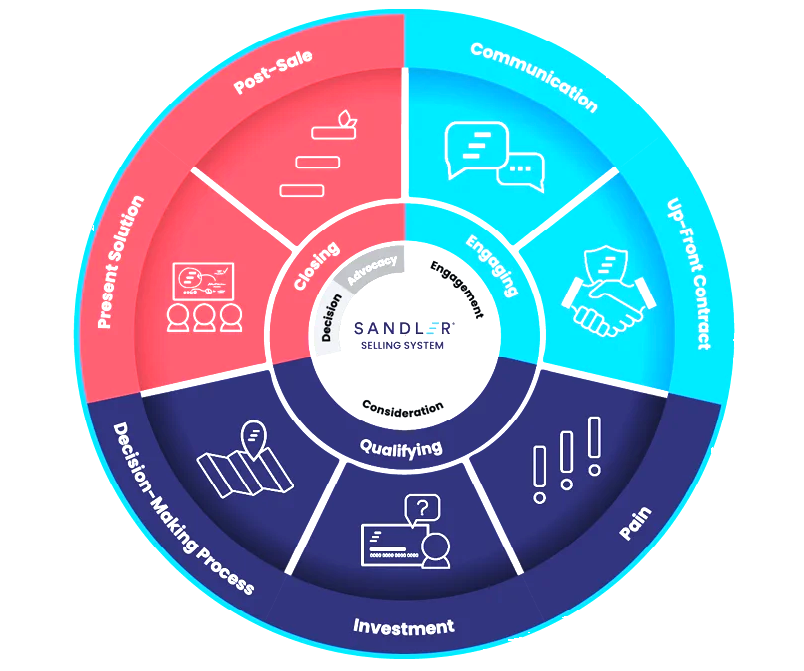
One of the core principals of Sandler methodology is that leaders should inspect the sales process, not simply the results.
Why?
Outcomes are lagging indicators. Process provides visibility into what's happening now.
A strong pipeline review examines where opportunities sit within a defined sales process and identifies where deals are getting stuck.
If a prospect has no compelling reason to buy, no clear decision process, and no committed next step, the issue is qualification.
Sandler teaches that qualifications should happen early and continuously throughout the sales cycle. The more rigor a team applies to qualification, the healthier the pipeline and the more accurate the forecast.
My Take: Hope Is Not a Revenue Strategy
Throughout my career in leadership and sales, I've seen the same pattern.
Companies confuse activity with progress.
A large pipeline can create a false sense of security.
A forecast can look healthy right up until the quarter ends.
What matters isn't the number of opportunities in the CRM, it’s whether those opportunities are qualified.
The strongest sales leaders create accountability around the people and systems, not just the number.
They challenge assumptions.
They coach the process.