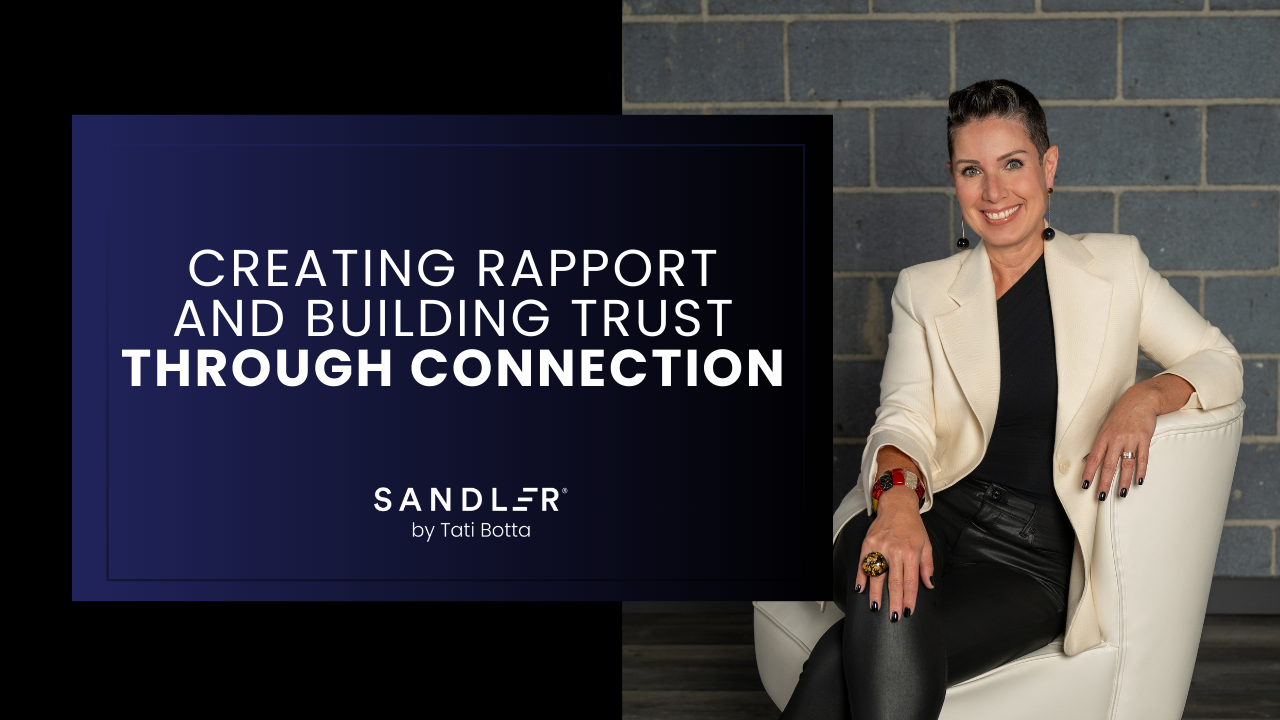
Creating Rapport and Building Trust Through Connection
This month, I’ve been talking about creating rapport and building trust—real trust. The kind that doesn’t disappear after the meeting ends. The kind that creates connections that actually last.
Today, I want to talk to you about DISC.
You may already be familiar with it, or you may have heard about it and dismissed it as “just another assessment.” But when used correctly, DISC is a powerful tool to help you connect with people on a much deeper level.
Think about this for a moment.
Have you ever been in a conversation where someone just wouldn’t stop talking—too much detail, too much explanation, too many side stories—when all you wanted was the point?
Or the opposite: someone rushed through everything, spoke in bullet points, and moved so fast you barely had time to process what was being said?
Maybe someone got very personal very quickly, and it made you uncomfortable. Or maybe you felt the person across from you was cold, distant, or transactional.
None of this is random. It’s usually a clash of communication styles.
You have your own style. The other person has theirs. And those styles don’t always match naturally.

Understanding Different Communication Styles
This is exactly why I use DISC as a guide for better conversations.
DISC is made up of four main profiles, and each one communicates—and connects—differently.
Dominance (D) types are fast, direct, and task-oriented. They value efficiency and results. When you communicate with them, get to the point. Don’t over-explain. Respect their time.
Influence (I) types are people-focused and relationship-driven. They care about energy, connection, and interaction. If you jump straight into facts and tasks without acknowledging the human side, they may feel disconnected.
Steadiness (S) types are calm, patient, and great listeners. They care about harmony and impact on others. If you rush them or fail to explain how your idea supports people or long-term stability, you may lose their trust.
Conscientiousness (C) types are analytical and detail-oriented. They don’t like to be rushed. They want data, logic, and time to think. If you skip details or pressure them to decide quickly, they will pull away.
None of these styles is better than the others. They’re simply different.

Speaking Their Language to Build Trust
Here’s the key point: rapport and trust are not built by communicating the way you prefer.
They’re built by communicating the way they receive information best.
DISC isn’t about labeling people or putting them in boxes. It’s about awareness. It’s about observing how someone speaks, how they ask questions, how they respond to pressure, pace, and detail.
When you adjust your approach to match their style, you create something powerful: empathy.
You show that you’re paying attention. You show that you respect how they think. You show that the conversation is about them, not you. That’s how trust is built.
If you want to learn more about DISC or have a deeper conversation about creating meaningful connections, send me a message. We can also schedule a discovery call and explore how this applies to your real-world conversations:
Schedule here: https://meetings.hubspot.com/tatiana-botta
Talk soon,
Tati