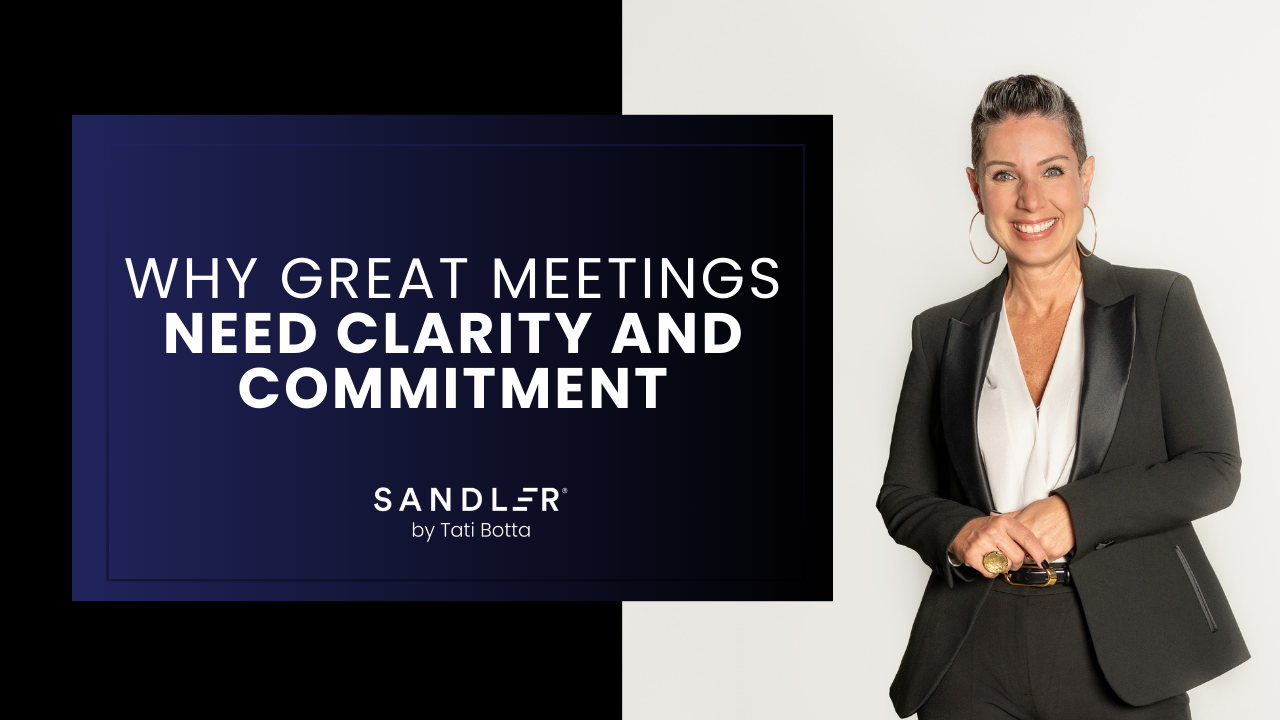
Why Great Meetings Need Clarity and Commitment
Have you ever been in a meeting where you had no idea why you were invited?
You show up. You listen. You participate. And yet, halfway through, you’re still wondering what the point is. Then the meeting ends—and it gets worse. No next steps. No ownership. No clarity on who is doing what.
I’ve been there more times than I care to admit.
And what’s frustrating isn’t just the wasted time. It’s the missed opportunity. Meetings like this don’t build trust. They slowly erode it.

Building Trust and Creating Rapport
This is exactly why we teach our clients what we call the upfront contract.
Before I explain what that is, let’s zoom out for a moment. This entire month, I’ve been talking about building trust and creating connections that last.
We talked about rapport that goes deeper than small talk. We talked about DISC and communicating in a way that respects the other person’s style. We talked about the 30-second commercial and introducing yourself with clarity and intention.
All of these are stepping stones.
And once you’ve done all that—once you’ve earned the meeting—you have one more responsibility: to run that meeting well. You can’t miss!
Because a great meeting doesn’t just feel good. It creates direction, and I assume this is what you are looking for, right?

Why “Great” Meetings Still Fail
Here’s something many sales professionals won’t say out loud: you can have a meeting that feels great and still goes nowhere.
I’ve experienced this myself. You leave the conversation energized. The client was engaged. The dialogue flowed. And yet… nothing happens afterward. No reply. No follow-up. No clarity.
Suddenly, you’re chasing someone, unsure of why they went quiet—or what they even agreed to. As a salesperson, that’s unacceptable to me.
If I’ve invested time and energy into a meeting, I need to know what comes next. I need a clear future commitment. Without it, I’m guessing—and guessing is not a strategy.
Using the Upfront Contract to Continue the Conversation
This is where the upfront contract comes in.
An upfront contract creates clarity, sets expectations, and—most importantly—builds trust. It permits both sides to be honest.
At the beginning of the meeting, you clearly state:
- How much time do you have
- Why you are meeting
- What you’d like to accomplish
- And what a successful outcome looks like for both parties
This isn’t about control. It’s about respect.
In a sales conversation, your goal is discovery. You’re figuring out whether you can actually help. And just as importantly, whether you should.
If there’s no fit, you don’t want polite silence or vague “let’s reconnect later.” You want transparency. The upfront contract creates that space.
It allows the other person to say yes, no, or not now—without discomfort.
And that’s powerful.
Because clarity builds confidence.
And confidence builds trust.
The upfront contract is the final layer in creating meaningful connections—connections that may lead to business, or may simply lead to strong professional relationships.
Both matter.
If you find that your meetings lack structure, clarity, or commitment, that’s not a personality issue. It’s a skill gap—and it can be fixed.
If you want help conducting more effective meetings, schedule a discovery call, and we’ll take it from there. You may see firsthand what I am talking about.
Schedule here: https://meetings.hubspot.com/tatiana-botta
Talk soon.
Tati