Measuring Training Success Through Data
This month, I’m diving into one of my favorite topics: how to measure success with data when you’re investing in training your team. Last week, I talked about assessments — how they help you measure talent, understand skill gaps, and see exactly what improved after a few months of development.
Today, I want to continue the conversation by looking at another powerful source of truth: your CRM.

Leveraging Your CRM as a Mirror
If there’s one thing I wish every leader understood, it’s this: your CRM is more than a place where people “enter stuff.” It is a mirror. A reflection of how your team sells, how they think, and how consistently they follow the process.
Unfortunately, many organizations treat the CRM like a chore — something to be filled out, updated only when someone remembers, or used inconsistently across the team. When that happens, you lose the single most reliable window into your sales operation.
A CRM used correctly becomes one of the most valuable coaching tools you have.
It shows you:
- The sales cycle and where opportunities slow down.
- How each sales rep is managing (or mismanaging) their pipeline.
- Where deals tend to get stuck.
- How consistently do reps follow the process.
- Trends that can help you shorten the sales cycle or renegotiate deals more effectively.
When leaders and reps use the CRM well, it stops being “data entry” and becomes insight, accountability, and strategy all in one place.

Daily Use and Measuring Improvement
One of the habits that has helped me most in my own business is keeping my CRM open in front of me every single day. It’s not an afterthought. It’s not something I check once a week. It’s part of my workflow.
Why? Because when the CRM becomes part of your daily routine, you begin to see patterns faster. You make better decisions. You stop relying on memory and start relying on facts.
And when your team uses the CRM the same way, you suddenly have access to clean data — the kind of data that tells you whether your training is actually working.
Here’s the truth many leaders don’t want to say out loud:
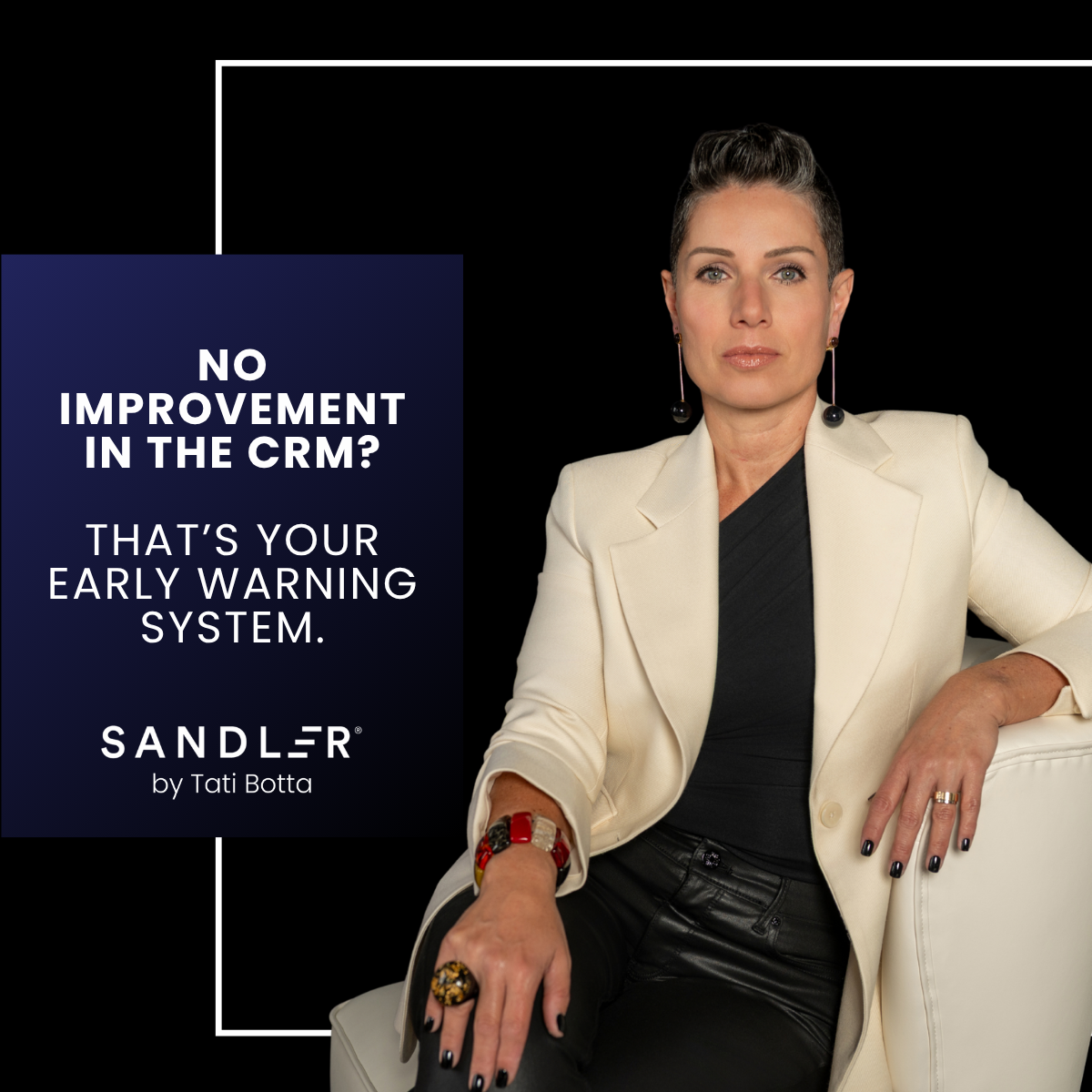
If you’ve invested months in training and your CRM doesn’t show improvement in activity, pipeline health, or movement through the sales stages… something is off.
Either the training isn’t being applied, the process isn’t being reinforced, or your CRM isn’t being used correctly. But the good news is: the data will tell you. You just have to be willing to look.
Curious about How to Use Your CRM More Effectively?
If you’re wondering whether you’re using your CRM the right way — or if you know it’s time to strengthen the discipline around it — let’s talk. A quick discovery call can help you understand what’s working, what’s missing, and how to turn your CRM into a powerful measurement tool for your team.
Because you can only improve what you can see.
And the CRM, when used right, shows you everything.
Talk soon,
Tati