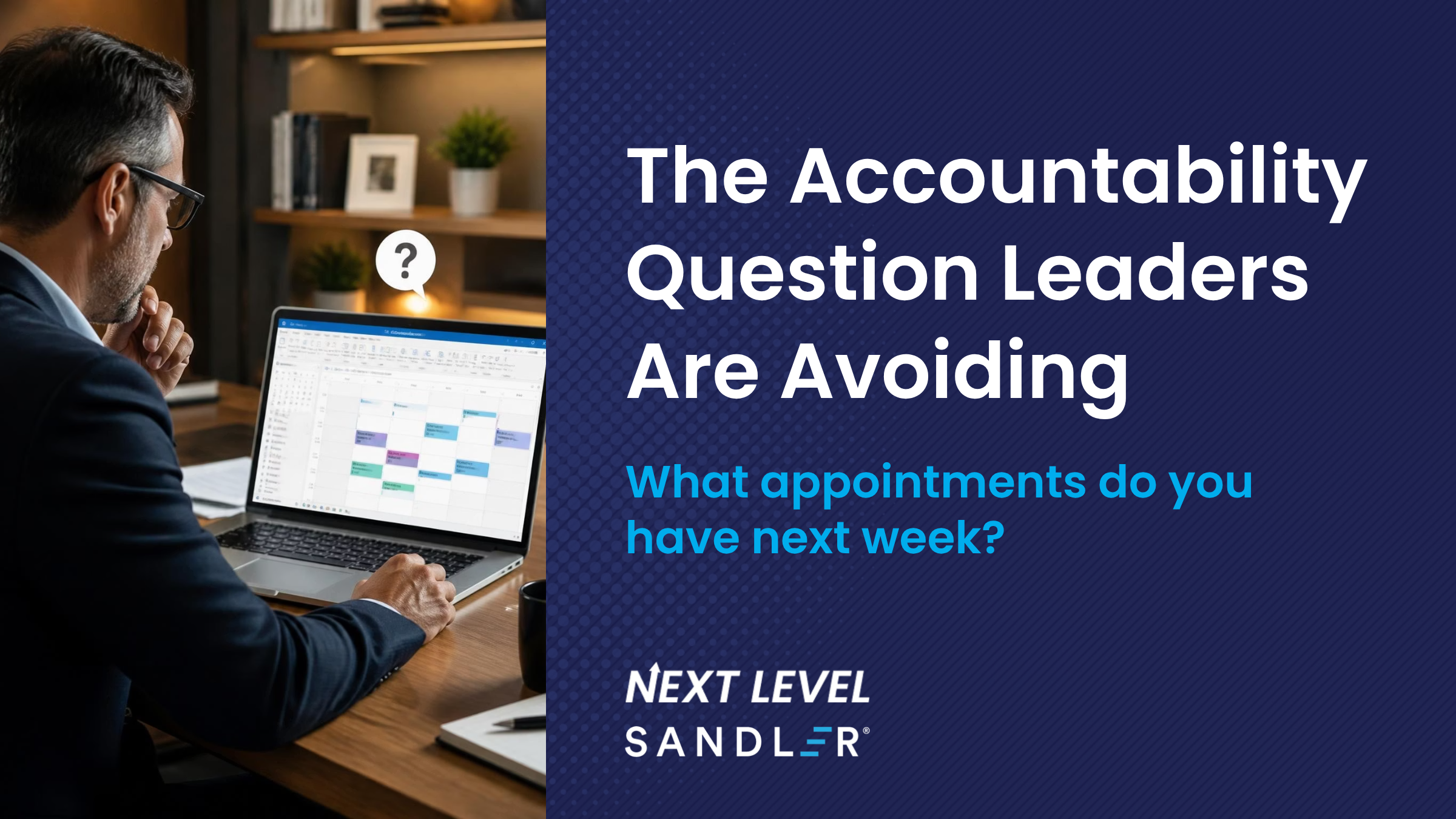
By the time most firms hold a year-end review, the number is final, and the conversation is a verdict. The only thing left to decide is how everyone feels about the results.
I encourage my clients to hold that conversation in November. You get six more weeks to change the outcome and put a first-quarter behavioral plan in motion before the holiday break.
Don't wait until it's too late. Finish strong, and start ready for the new year.
Why these conversations fail
I see two versions of the year-end review that go wrong.
The soft review: The leader likes the person, the year was hard for everyone, and the gap between what was promised and what was delivered gets a sympathetic nod instead of a hard question. The standard drops a little, and because your culture is defined by what you tolerate, it stays down.
The hard review: The leader opens with the miss. The person gets defensive in the first ninety seconds, and nothing said after that gets heard. The person leaves feeling judged, and the behavior stays unplanned and, most likely, unproductive.
A Bridge to Behavior Change
A year-end conversation that motivates stands on two footings.
- High standards: what the person committed to in January, in writing, and what the calendar shows they did about it.
- Psychological safety: the person's belief that telling the truth about the gap will lead to help, and will never lead to punishment or embarrassment.
Leaders tend to treat those as a trade-off. Pick one, and you get an unfinished bridge that ends up in the water along with your employee. You need both, at the same time, in the same forty-five-minute meeting.
The Sandler technique that holds them together is an up-front contract for the conversation. Before you set the meeting, agree on what to expect: the purpose of the conversation, the date and time, what each of you brings to be prepared, and what happens at the end.
How I Run It
Here's the review I run with client teams.
Set the up-front contract. "We have forty-five minutes. I want to look at what you committed to back in January, what happened, and what you want the first quarter of next year to look like. At the end, we'll both know the plan moving forward. Fair?"
Open with the number, then the behaviors behind it. The number is a fact. Say it without adjectives. Then look at the calendar: how many opportunities were created, how many client conversations, how many referral asks, how many weeks with nothing on it. The calendar explains the results.
Ask, then stop talking. "What do you make of that?" "Where did the plan hold, and where did it break?" "What got in the way that I didn't know about?" Anyone who's been in our leadership sessions or read last month's post knows what comes next. The silence does the coaching.
Let the employee own the performance gap. A skills gap the person names themselves is one they'll work on. A gap their leader names makes them defensive. Your questions should be good enough that they see and understand what is missing.
Build the first-quarter plan together, in writing, by behavior. Three to five commitments you can see on a calendar, with the first weekly check-in already scheduled in January. But start now, this year. Don't make it a New Year's resolution. Resolutions are wishes without accountability.
Praise without a standard reads as pity. A standard without safety reads as a threat.
What motivates people is being taken seriously: a leader who knows the number, asks real questions, listens to the whole answer, and comes back to check in and help.
If you don't have direct reports
In our leadership class last month, several people from engineering firms told us they don't manage anyone. Instead, they have project managers and engineers attached to their work. You still owe those people this conversation, and the up-front contract is what makes it acceptable to hold it without a title. "Can I take forty-five minutes to look at how this year went and plan the next one with you?"
Almost no one should say no.
Six weeks is enough time to change your results if you start now. Hold the conversation, write the plan, and check in on it every week until the behaviors change and stick.
If nobody inside the firm has the time or the appetite to run this process, someone outside it can. I'll do it for you, alongside your leaders, until the habit belongs to them. Let's talk.