You were trained in policy, compliance, and keeping people whole. Almost none of that training was about how to reliably hire the right people, ramp them fast, and keep your best from walking. That's the quiet bind for HR. You own the outcome, hire well and retain talent, but you were rarely handed a repeatable system for getting there, so it comes down to instinct and hope.
Here's the good news: hiring and retention are a system, not a gut feeling. The organizations that build strong teams don't rely on the candidate who interviews well. They define the role before they post it, they let evidence predict performance, and they make onboarding and retention deliberate. Sandler data shows fifty percent more salespeople hit quota when they're developed the right way, and Sandler trains more than thirty thousand people a year. The pattern behind it is repeatable.
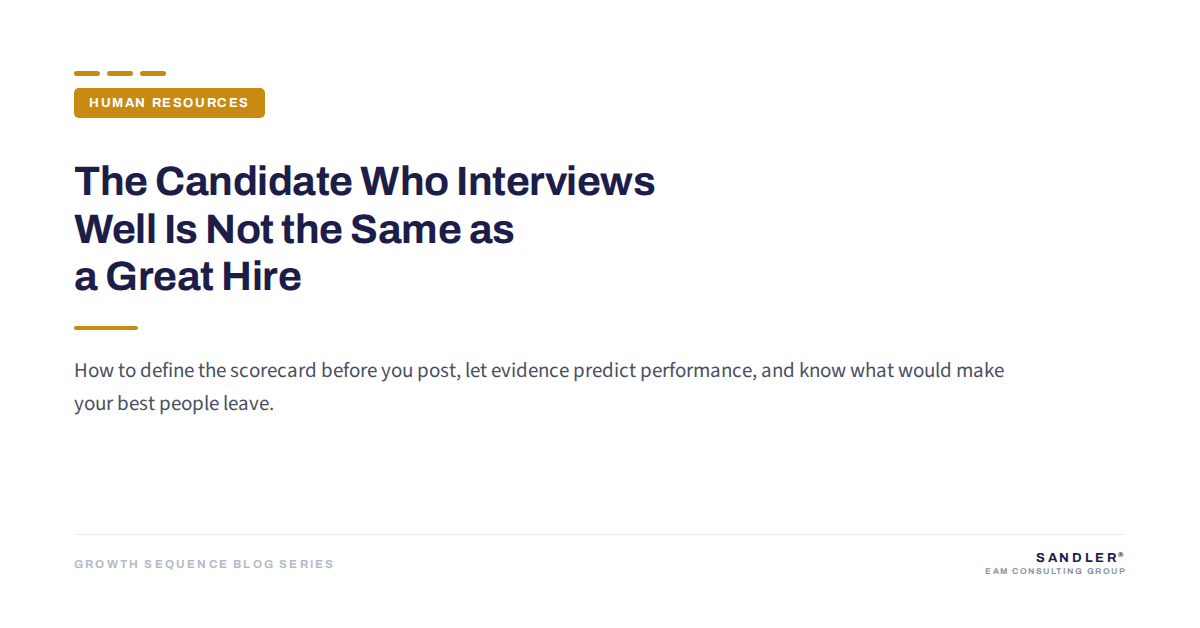
Start with the scorecard. Most hiring goes wrong before the first interview, because no one defined what great actually looks like in the role: the behaviors, the outcomes, the way this person has to work. Write that down first. A candidate who's great in the interview isn't the same as a great hire, and a scorecard keeps you honest when someone charms the room. Let assessments and structured questions predict performance instead of first impressions.
Then shorten the ramp. A new hire left to figure it out alone takes far longer to get productive, and some never do. A structured onboarding, with a clear path and real coaching, turns day one into contribution faster. And coach behavior, not just knowledge. People change what they do through practice and reinforcement, not a single orientation. A common language and a coaching habit are what make development stick.
Finally, keep your best people on purpose. Know what would make them leave before they do, because the cost of a regrettable departure, the search, the ramp, and the lost momentum, dwarfs the cost of keeping them. Build a bench and grow leaders from within so one resignation isn't a crisis.
None of this asks HR to become a recruiter or a coach overnight. It asks for one habit at a time: define the scorecard before you post, let evidence pick the finalist, and make onboarding and retention deliberate instead of accidental. Those habits, run consistently, are the difference between hiring on hope and building a team that stays.