Hiring Salespeople: Drive Over Industry Experience
Why small businesses should hire for drive over industry experience, now that AI supplies the expertise.
For ten years I have sat across the table from owners who believe their salespeople don't want to get better. He's comfortable, or she's done it her way for twelve years and won't change. Then they ask us for a sharper KPI or a tighter commission plan that will finally light the fire. So start there: if you were to describe a great sales rep, what words come to mind first?
Most owners answer with words about character, like hungry and coachable. Almost nobody says twelve years in the industry. Comfort zones are real, and I have watched good sellers live inside one for years. We've all heard some version of the "1 year of experience repeated 10 times versus 10 years of experience." Time and how you use it is nuanced. What those owners miss is who is walking into sales right now and why. More of them chose it on purpose, and the owner who builds around that reason will hire better and keep people longer.
Willy Loman and the first call to sales
Arthur Miller put the old version of this job on stage in 1949. Willy Loman chose sales after meeting an 84-year-old salesman named Dave Singleman, who sold from a hotel room in green velvet slippers and drew a crowd of buyers and salesmen to his funeral. Willy took one lesson from that man: success belongs to whoever is well liked. He chased it for the rest of his life, and at the grave his son says he had the wrong dreams.
Willy was the tail end of an earlier call to sales. The traveling salesman of the industrial boom carried the myth of the self-made man, the promise that personality and a firm handshake could build a life from nothing. By the 1950s that world was giving way to the organization man, with an assigned territory and early market research deciding what to sell before anyone knocked on a door. Charm still got a seller through the door, and the numbers took over from there. If you haven't read or seen Death of a Salesman in awhile, it's still good.
Rapport without trust is just being liked, and being liked doesn't close deals.
The accidental seller
For most of my working life, sales has been the job people land in by accident. When HubSpot asked 420 salespeople how they got into the work, fewer than four in ten said they chose it. The rest came in sideways, and the most common door was a business degree.
The business degree made the classic accidental seller. It gave a graduate enough surface acumen to hold a competency conversation, to talk margin and return on investment in a way that sounded like they understood the buyer's world. That shared vocabulary mimicked experience. A sharp buyer could often hear how shallow it ran, but it was enough to get hired, and more than half of business graduates still start their careers in a sales role. Alongside them came the technician promoted because customers liked him, and the founder who learned that nobody buys the product until somebody sells it. And that founder is burnt out of selling and want another version of themselves to scale.
That accidental salesperson shaped how most of us train and manage. We assume reluctance. We build scorecards to force the behavior, and we treat mindset as the lock we have to pick before anything else moves.
The call to sales returns
The cycle is turning, and colleges are under real pressure. Syracuse University is heading into its first budget deficit in years after missing its enrollment target, and its chancellor says competition for students is "more intense than at any time in modern U.S. history." Tyler Austin Harper, a former professor now writing for The Atlantic, goes further: "At some point parents will decide they will not pay $100-400k combined for their kids to cheat their way through college. I expect a bang, not a whimper."
The eighteen-year-old looking at that tuition bill is asking the question a business degree used to answer for them: what can I do that someone will pay me for? A growing number answer with sales. The Sales Education Foundation listed 27 universities with sales programs in 2007 and more than 235 in 2024. Those students pick sales at nineteen and run discovery calls in role-play labs, and many of them have networked into a company before they graduate.
What AI takes off the table
Seth Marrs at Sandler put the next question plainly in his piece on the Claudeforce partnership between Salesforce and Anthropic: "If the system runs the deal, what exactly are we paying sellers for?" His answer is that deal skills stop setting sellers apart once software orchestrates the deal, and "the ability to sell, to read a room, to build trust, and to create urgency becomes the largest remaining variable to winning."
Seth is writing about enterprise teams running Salesforce, and most owners I work with will never buy it. What happens on the corporate side reaches small business anyway, because AI is democratizing it. Technical competence is getting cheaper, and so is organizational competence, the scorecards and training systems that used to take a sales operations department. An owner only has to design the system now, built toward what is possible today and what will be possible next.
That lands hardest on the accidental seller. AI now hands everyone the surface acumen a business degree used to supply. A new seller can prep an account and draft a proposal in the time it used to take to find the file, and the Bureau of Labor Statistics expects those same tools to reduce demand for sales reps over the next decade. As technical competence gets cheaper, the scarce thing becomes the person who wants the conversation and has practiced it. Seth's warning to leaders is direct: "The organizations that answer it early will spend 2027 hiring and coaching against a different profile than the ones that wait."
Who small businesses hire
Corporate sales teams are recruiting those graduates. The design-build firm and the twelve-person software company mostly are not. Small and midsize companies still run on accidental sellers. The owner was the best estimator or designer in the building, and one day realized the company only grows if somebody sells. Each person the owner adds makes selling a bigger share of the job, until selling decides whether the business outlives the owner's own effort or stays a practice built around one expert.
So owners hire what they know. Hold the words you picked for a great rep next to your last sales job posting, and count the lines asking for years in your industry against the lines asking whether the candidate wants to sell for a living. For most small businesses, the posting describes a different person than the rep they pictured.
Hiring for drive
The expert brings something real. Technical conversations start easier, and in some industries a buyer won't take you seriously without that fluency. What you give up is the drive of someone who picked this career and wants to get good at it.
A remodeling firm we work with once had to send its controller to a sales call because nobody else was free. He had been through Sandler training, and he had never sold a remodel or learned the trade. He knew numbers. So he did what his training told him to do and asked questions for the whole meeting. The homeowners walked out saying he was the only remodeler who understood how much their green building certifications mattered, and he had never studied green building in his life.
I can be an expert in my subject matter and still know nothing about my client, and until I learn about them, anything I suggest is guesswork. Someone with drive and without bad habits is a closer you can build, and AI makes the technical half of that build faster every year. If technical confidence carries real weight in your market, hire for a mix, and decide on purpose which half you are willing to train.
Onboarding
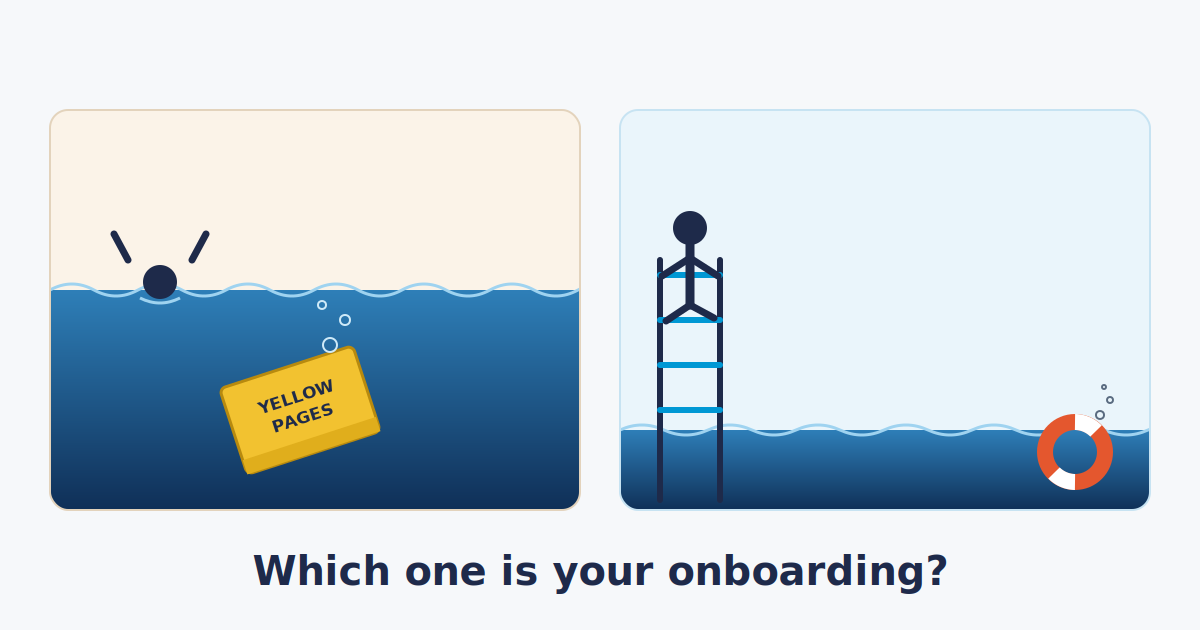
Every owner knows the old model: here's how we've done things, here's as many hours of onboarding as we can spare, now go get 'em, Tiger. The old joke was that a sales manager handed a new salesperson the Yellow Pages and pointed at the phone. That was never enough, and today the new seller walks into buyers who researched your company before the first call. And if we're not asking questions, we miss what the research got wrong.
Throwing someone in the deep end and tossing them a couple of bricks so they learn faster is a hope-based system. A better picture is a life jacket with a slow leak. Nobody drowns, and the new seller still has to swim toward the quickest safe path to trust.
Reinforcement
Our most successful clients schedule role-plays inside the sales team, because thinking isn't speaking. You can rehearse a conversation in your head all week and still stumble the first time the words have to come out of your mouth. Practicing in front of your prospects is malpractice, and I expect to be bad at anything new for the first twenty tries.
Our AI role-play tool is live, with a coach built in, and it changes what a small team can do. You design scenarios around conversations you know are coming. Every new hire will run a first call, and every seller will hear pushback about money or commitment, so "we need to think about it" and how you talk to that is familiar long before a real prospect says it. A salesperson in one of our classes, two weeks into his first sales job, volunteered to test it before anyone else on his team. He scored 76 percent on one run and 40 on the next step, and said the hardest part was facing himself while he did it.
The first step belongs to you as the owner. Role-play with the AI yourself, long enough to see what it catches that you miss, before you ask anything of your team. Role-play is the first rung. The step up is Sandler's Sales Performance Ecosystem, which scores every seller's real conversations against one standard and builds each person's training from their own gaps. It exists because, by Sandler's count, 84 percent of training is forgotten within the first three months. At that point practice stops depending on a manager remembering to schedule it.
Some of your people will find practicing with an AI uncomfortable, so price the alternative. You already carry a rough number for what a bad hire costs. Most leaders watch a bad hire fail through the 90-day review and then blame themselves, when the better question is which steps were in place to make that hire succeed. Put that number next to an hour a week of your own time in role-play. We have to stop hiring out of hunger, and stop blaming ourselves for what is usually a missing system.
Retention
The last question is the one owners skip: can you hire a seller expecting them to stay ten years, or does your business lose sellers on a regular cycle? If you lose them, you need top performers who build a book of relationships while they're with you and leave it behind when they go. That only works if the CRM and the handoff process exist before the resignation letter does.
If you want them to stay, raise the bar. High performers want to be coached to a higher standard, and the ones who leave when the bar goes up are usually the ones it should have gone up for already. The seller who chose this career wants to get better, and a leader who trains that seller every week gives them a reason to keep choosing the company.
Connect with me on LinkedIn, and hear more on The Sandler Training Hour.