Over the years, I have had many conversations with sales leaders who are frustrated by stalled deals, price pressure, and a loss of control late in the sales process.
What is interesting is that these challenges rarely come down to product knowledge or effort.
More often, they come down to how the salesperson showed up in the conversation.
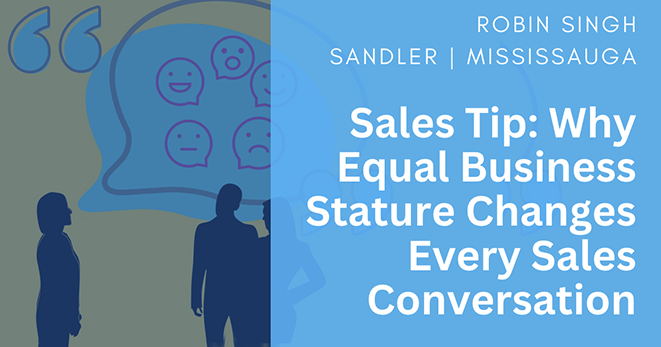
One of the most important principles in effective selling is maintaining equal business stature. This means interacting with prospects as peers, not as subordinates. When that balance is lost, credibility erodes quickly.
How Equal Business Stature Gets Lost
Salespeople do not consciously decide to lower their position in a conversation. It usually happens through small, well-intentioned behaviors such as over-explaining, avoiding tough questions, or agreeing too quickly in order to keep momentum.
When this happens, the conversation stops being adult-to-adult and becomes subordinate-to-decision-maker.
Once that shift occurs, buyers naturally take control. They begin to dictate pricing discussions, timelines, and decision criteria. Not because they are difficult, but because the salesperson has stepped out of a peer role.
In executive sales conversations, credibility is often the difference between leading the deal and reacting to it.
What Equal Business Stature Really Means
Equal business stature is not about confidence tricks, dominance, or ego. It is about mutual respect.
It means being comfortable asking direct questions and challenging assumptions when something does not add up. It also means being equally comfortable walking away when there is no real fit.
That willingness to walk away is often what builds trust.
In my experience, executives respect sales professionals who can engage them honestly without pressure or deference. Those conversations feel different. They are grounded, direct, and focused on outcomes rather than approval.
The Impact on Deal Quality
When salespeople maintain equal business stature, several things change.
Conversations stay balanced. Decisions become clearer. Price pressure decreases. Deals either move forward with alignment or end cleanly.
When equal stature is lost, the opposite happens. Salespeople begin chasing, discounting appears late in the process, and deals stall without clear answers.
The issue is not persuasion or negotiation skill. It is whether sales professionals consistently show up as peers in every conversation.
That is the real question sales leaders should be asking themselves.
---
For sales and leadership training focused on structured selling, effective communication, and building predictable sales processes, contact Robin Singh at Sandler Mississauga. Robin Singh works with sales teams and leaders to improve sales execution, reduce stalled deals, and drive consistent growth through proven sales training and coaching methodologies.