Are you looking for better ways to coach your sales team—without micromanaging or jumping into every deal?
Effective sales coaching isn’t just about reviewing pipelines or fixing stalled opportunities. It’s about helping your team become more independent, reinforcing the right behaviors, and building the ability to self-correct—even when you’re not in the room. If you want consistent, predictable growth, it may be time to rethink what coaching really means inside your organization.
Why Traditional Sales Coaching Falls Short
Many sales managers believe they’re coaching when they step into deal reviews or troubleshoot stuck proposals. In reality, that often turns into micromanagement—doing the thinking for the rep instead of helping them develop their own thinking.
The problem? When leaders become the crutch, reps become dependent. Tough decisions get outsourced upward, limiting individual growth and capping the manager’s ability to scale.
True coaching isn’t about having all the answers. It’s about asking better questions—questions that guide reps to their own solutions. Done well, coaching sharpens problem-solving skills, reinforces methodology, and builds the confidence reps need to win consistently.
The Shift: From Tactical Fixes to Behavioral Change
Strong sales leaders move beyond short-term tactics and focus on shaping behaviors and mindsets that drive long-term success.
Ask yourself:
Are you coaching deal strategy—or developing decision-making skills?
Are you pointing out mistakes—or helping reps recognize them on their own?
Are you reinforcing behaviors and process—or only celebrating outcomes?
Behavioral coaching shifts the focus from isolated wins to repeatable success. It’s what builds resilient teams capable of performing under pressure.
Coaching That Sticks: A Reinforcement-Driven Approach
One-off coaching conversations rarely create lasting change. What works is reinforcement and repetition.
At Next Level, we coach leaders to make coaching part of the operating rhythm of the business—woven into one-on-ones, pipeline reviews, and informal check-ins. Coaching doesn’t need to be long to be effective. Consistency matters more than duration.
When coaching focuses on behaviors—not just deals—it becomes part of the culture, not a reaction to underperformance.
Creating a Culture of Self-Sufficiency
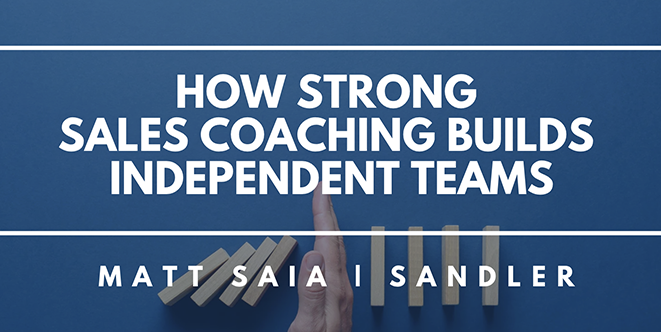
Redefining coaching also means redefining success. The strongest sales leaders measure success not by how involved they are—but by how well their teams perform without them.
Great coaches build self-sufficient teams. That frees leaders to focus on strategy, growth, and scaling the business. If reps still need help closing every tough deal, leadership hasn’t fully taken hold.
Take Action: Coaching Tips to Start Using Now
Here’s where to begin:
Focus on behavior. Ask what behaviors led to the outcome—and which need reinforcement or adjustment.
Ask, don’t tell. Use questions to develop thinking instead of giving answers.
Make coaching routine. Build it into weekly and daily rhythms.
Promote self-diagnosis. Encourage reps to evaluate what worked, what didn’t, and why.
Sales leaders who rethink coaching build adaptable, confident teams that perform in any market.
At Sandler | Saia Sales Leadership | Sales training, management coaching, leadership development, we help sales leaders create coaching cultures that drive lasting improvement. If you’re ready to help your team grow beyond dependence and into consistent performance, contact us here if you want to talk further.