


Why the Best Sales Teams Never “Wing It” — and the Free Pre-Call Planning Tool They Use Instead
There’s a dangerous myth that quietly undermines sales performance:
The best salespeople don’t need to prepare.
It sounds bold. Confident. Experienced.
It’s also completely wrong.
High-performing sales teams don’t rely on instinct alone. They rely on pre-call planning, structured sales conversations, and disciplined execution.
And the most effective teams use a simple, free tool to make that happen: a structured pre-call planner.
Why “Winging It” Kills Sales Performance
Most sales calls don’t fail because:
The product is wrong
The pricing is too high
The salesperson lacks talent
They fail because of poor preparation.
When sales reps “wing it,” several predictable problems appear:
Meetings drift without clear outcomes
Next steps are vague
Pipelines fill with “maybes”
Forecasts become unreliable
Coaching becomes reactive instead of strategic
From a sales leadership perspective, a wing-it culture creates unmanaged risk. And unmanaged risk shows up as inconsistent revenue. Preparation isn’t about being rigid. It’s about reducing uncertainty and increasing control.
What Is Pre-Call Planning in Sales?
Pre-call planning is the structured process of preparing for a sales meeting before it happens.
Effective sales call preparation includes:
Clarifying your mindset
Defining the meeting objective
Establishing an Up-Front Contract (agenda and expectations)
Identifying desired commitments
Preparing high-impact discovery questions
Anticipating objections and decision dynamics
Top-performing sales organizations treat this as standard operating procedure — not optional homework.
Step 1: Start With Mindset (Before Strategy)
Before you think about slides, pricing, or objections, ask:
Who am I showing up as in this meeting?
Are you:
Hoping this deal saves the quarter?
Trying to impress?
Or genuinely curious about whether a real problem exists?
Buyers can sense neediness instantly.
Disciplined pre-call planning forces sellers to reset their internal posture before the meeting begins. That shift alone can change the trajectory of a conversation.
Confidence without preparation feels pushy. Confidence with preparation feels professional.
Step 2: Establish an Up-Front Contract
Every professional sales meeting needs a clear agenda and mutual expectations.
An effective Up-Front Contract answers:
What are we discussing today?
How will we use our time?
What outcome defines success?
What happens next?
Without this structure, meetings drift. With it, they stay focused and outcome-driven.
Sales teams that normalize this practice experience:
Faster deal progression
Fewer “ghosted” follow-ups
Stronger decision clarity
Step 3: Define the Desired Outcome (Home Run vs. Base Hit)
One of the biggest mistakes in sales call preparation is unrealistic expectations.
A “home run” outcome is rarely closing the deal.
More often, success looks like:
Access to another stakeholder
Agreement on next steps
Budget confirmation
Scheduling a deeper technical review
A clear “no”
Yes — even a no is progress. Early disqualification saves time, energy, and forecasting confusion. Clean “no’s” are far more valuable than soft “maybe’s.”
Strong pre-call planning forces sellers to define:
The ideal outcome
The acceptable outcome
The walk-away criteria
That discipline improves pipeline hygiene and forecast accuracy.
Step 4: Prepare Strategic Questions (Not Surface Discovery)
The difference between average and exceptional sales conversations is almost always the quality of the questions asked. Strong sales questions:
Create contrast
Reveal hidden problems
Challenge assumptions
Uncover decision criteria
Surface political dynamics
When sellers improvise discovery under pressure, they default to shallow questions. When they plan in advance, they lead deeper conversations. Preparation shows up as calm authority — not arrogance. And buyers trust that.
Why a Simple Sales Pre-Call Planner Works
The most effective pre-call planners share three traits:
They’re simple
They’re repeatable
They’re fast
The best tools take five minutes to complete. But those five minutes significantly increase the likelihood that a meeting will produce a clear, measurable outcome. This isn’t bureaucracy. It’s performance insurance.
The Leadership Advantage of Standardized Pre-Call Planning
When every seller prepares the same way, everything improves:
Coaching Improves
Managers can coach against structure instead of guessing what happened.
Pipeline Reviews Improve
Deals are evaluated based on commitments, not optimism.
Forecast Accuracy Improves
Outcomes are defined before meetings happen.
Enterprise Sales Coordination Improves
In complex, multi-stakeholder deals, a structured pre-call planner becomes a coordination tool. It captures:
Key contacts
Roles and influence
Communication preferences
Anticipated objections
Relationship dynamics
Agreed next steps
In enterprise environments, no call stands alone. Structured preparation ensures alignment across the buying committee.
The Cultural Shift: From Ego to Discipline
Elite performers in every field rely on preparation:
Pilots use checklists
Surgeons rehearse procedures
Professional athletes review film
Coaches script plays
Sales is no different.
If you want:
Better sales conversations
Cleaner decisions
Higher close rates
More predictable revenue
The answer isn’t more hustle. It’s better preparation.
The Free Tool High-Performing Sales Teams Use
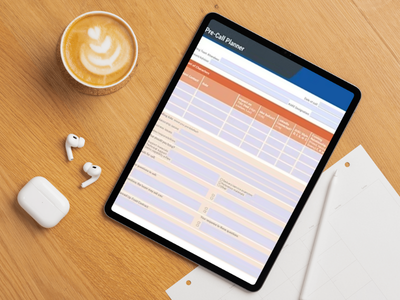
The Sandler Pre-Call Planner is a one-page, structured sales planning tool designed to:
Clarify mindset
Define desired outcomes
Establish Up-Front Contracts
Strengthen question strategy
Improve meeting discipline
It replaces guesswork with structure. If your team is still relying on instinct alone, it may be time to shift from bravado to preparation. Because the best sales teams don’t wing it.
They plan — and win.


.0000000000000.png)