During a recent coaching session, a salesperson named Jason asked his manager, Ellen, a simple but powerful question.
“If I focused on just one thing over the next 30 days, what would create the fastest improvement in my closing numbers?”
Ellen answered immediately.
“Learn to speak three more languages.”
Jason was caught off guard. He was not expecting that response.
Ellen explained that Jason currently spoke only one behavioral language, his own. In DISC terms, it was the D style. When Jason interacted with prospects who shared that style, conversations flowed easily and deals moved forward. When he encountered prospects who did not speak that same language, momentum often stalled.
Her point was simple and powerful. By learning the other three DISC behavioral languages, Jason could dramatically expand the number of prospects he connected with, build trust faster, and improve his results.
Why Behavioral Language Matters in Sales
Every prospect processes information differently. Some want speed and outcomes. Others want relationships. Some value stability, while others want details and proof.
When salespeople communicate only in their own preferred style, they unintentionally create friction. Prospects feel misunderstood, rushed, or overwhelmed, even when the solution is right.
The DISC behavioral model helps sales professionals recognize these differences and adapt their communication accordingly. It does not label people as good or bad. It simply explains how people prefer to think, decide, and interact.
Mastering DISC allows you to meet prospects where they are, not where you are most comfortable.
The Four DISC Behavioral Languages Explained
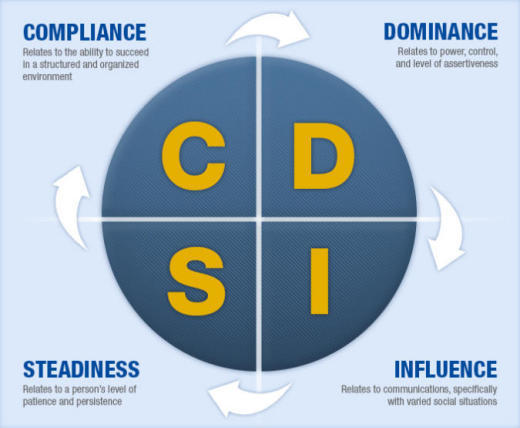
DISC identifies four primary behavioral styles. Most people have a dominant style supported by one or two others, depending on the situation.
Dominant (D)
Dominants are action oriented and results focused. They value efficiency, control, and forward momentum. They dislike small talk and long explanations. They want to know what needs to happen next.
When selling to a Dominant, get to the point quickly. Focus on outcomes, timelines, and results. Avoid unnecessary detail and keep conversations concise.
If you are a Dominant yourself, remember to slow down. Give others time to process and avoid jumping straight to solutions before understanding their perspective.
Influencer (I)
Influencers are enthusiastic, social, and relationship driven. They enjoy conversation and collaboration. They are creative and energetic, but may struggle with organization and follow through.
When working with Influencers, allow space for dialogue and expression. Engage them emotionally and keep the conversation interactive. Be sure to clarify next steps so momentum is not lost.
If you are an Influencer, stay mindful of time and structure. Make sure others are heard and decisions are clearly documented.
Steady Relator (S)
Steady Relators value consistency, trust, and harmony. They prefer predictable environments and thoughtful decision making. They are loyal and patient, but often cautious about change.
When selling to a Steady Relator, focus on stability, support, and long term value. Avoid pressure tactics and allow time for reflection. Building trust matters more than speed.
If you are a Steady Relator, practice sharing your recommendations clearly. While relationship building is a strength, prospects still need guidance and direction.
Compliant (C)
Compliants are analytical and detail oriented. They rely on data, accuracy, and logic. They want facts before committing and may delay decisions until they feel fully informed.
When working with Compliants, provide thorough information, documentation, and proof. Avoid rushing the process and respect their need for clarity.
If you are a Compliant, remember to balance facts with connection. Personal rapport builds trust alongside data.
Why DISC Creates a Competitive Advantage
Sales is not about convincing prospects to think like you. It is about communicating in a way that aligns with how they think.
When you learn to speak all four DISC behavioral languages, you reduce resistance, improve understanding, and create stronger buyer relationships. Conversations become more productive. Objections surface earlier. Decisions happen with less friction.
That is exactly what Jason experienced once he expanded his behavioral fluency.
Take the Next Step
Understanding DISC is not about memorizing traits. It is about applying behavioral awareness in real sales conversations, coaching sessions, and leadership moments.
If you want to improve communication, shorten sales cycles, and increase closing consistency, Sandler by Bailey Marketing Concepts can help.
Contact Sandler by Bailey Marketing Concepts today to learn how DISC-based selling and coaching can transform your sales performance