
The hypothetical dialogue that follows is adapted from conversations I’ve led with literally hundreds of senior executives and ownership teams over the years. The “4S” framework at the center of this conversation is my creation. This discussion framework can be used in person (with a laptop or tablet) or during virtual meetings (with the screen-share function). It begins with a simple request that I’ve never yet had someone answer “No” to.
Can I show you a slide I’ve put together – something that may help us get our heads around why something’s working, or maybe not working, with your sales team?
Sure.
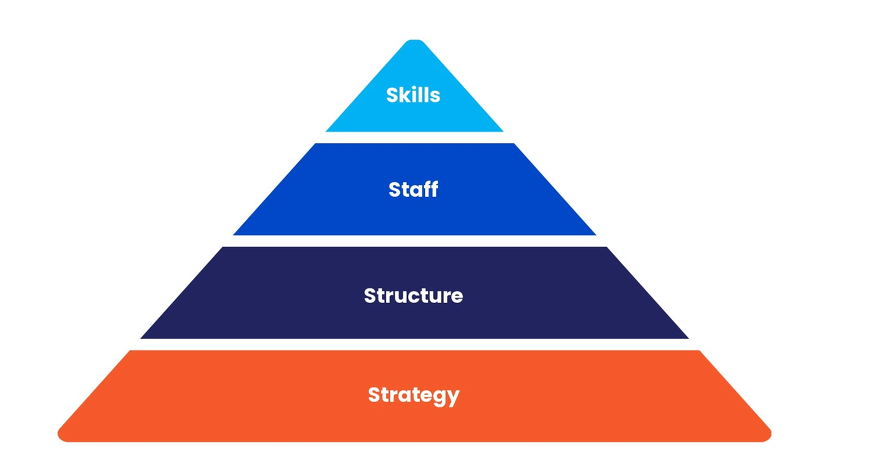
I call this the Constant Sales Improvement Process. Another good name for it, though, would be the Blind Spot identification Process. I share it when I meet with ownership teams. And usually, in these conversations with your counterparts in other industries, the people I’m talking to are already pretty familiar with Sandler. They know the name. They’ve heard about the methodology—it’s been around 50 years. It works. Full stop. But then we get into the deeper conversation together, about what’s happening in their world, and I hear things like:
“Hey, we’re having trouble with prospecting.”
Or “Our people can’t close.”
Or “We never seem to reach the real decision-makers.”
Or “Navigating a buying committee is a mystery to most of our people.”
Or “The questions our reps ask just don’t go deep enough.”
Sound familiar?
It all does, yes. Too familiar.
Right. All of that falls under the first S—Skills. Now, I don’t think anybody is going to dispute that Sandler’s got great skills to share with sales teams. They’re road-tested, proven. I could list a hundred Sandler skills for you right now, from handling gatekeepers to writing cold emails to building alliances within the buying committee to managing a multi-channel outreach. We can teach every one of those. But here’s the thing—and this is where people get blindsided: If the people you’ve hied aren’t coachable, if they’re not trainable, if they’re not even willing to change—then none of that matters. You could hand them a vial of magic dust, and it wouldn’t move the needle.
Okay. I see what you mean.
Which brings us to the second S—Staff. This is where we use assessments like TalentIQ to figure out: Who’s on the team? Are they hungry? Or are they account managers who’ve been coasting for three years, deep in their comfort zones? Because I promise you—trying to turn a comfort-zone account manager into a new-logo hunter will make you crazy. If you don’t evaluate people up front—if you don’t assess your staff for coachability—it won’t stick. You’re setting yourself up to fail.
That feels pretty familiar, too, actually. That’s the wall we keep hitting.
I hear you. And the thing is -- it’s not personal. It’s just a question of whether you’ve got the right people in the right seats on the bus. There are probably other roles for those people to play. But the assessments are going to let us know when securing new logos isn’t one of those roles.
So let’s say you’ve already got the bottom S—Strategy—locked down. You’re clear that you want more new business. Let’s assume that’s a good strategy. By the way, that matches up with the ATTAIN quadrant in Sandler’s KARE matrix. Anyway – we assume that’s solid. You know that’s what you want to do. That’s great. So now we match the skills to the strategy:
Gatekeeper navigation. Cold calls. LinkedIn targeting. Email structure. Juggling platforms. Following up. All good. But again—if the staff isn’t right, nothing sticks.
And even if you have the right strategy, and even if you’ve got coachable people, the S we haven’t talked about yet can still break it all: Structure. That’s where most orgs fall short.
Can you define Structure for me?
Sure. Structure is sales management that’s driven by one-on-one coaching. Structure is accountability in both directions. Structure is what we deliver to each individual member of the sales team. Not theoretical coaching, or so-called “team coaching,” but weekly person-to-person discussions that lock in actual, embedded behaviors. Ride-alongs. Role plays. Reviewing real calls using platforms like Fathom or Otter. Structure means we align the sales manager’s behaviors with the real-world requirements of the team, which, I have to be blunt with you, typically requires a major shift in behaviors, attitudes, and techniques. Structure means making sure you have managers who spend at least 50% of their time coaching—not just tracking metrics. Tracking metrics is not enough. But a lot of sales managers imagine it is. In fact, that’s the sales manager’s most common blind spot.
And here’s the takeaway – the one thing I’d hope you could hold on to and come back to and maybe keep thinking about after our discussion today. I’ve been doing this for a while. I’ve seen many companies with sharp people and a smart plan and a focus on building the right skills sets. And you know what? If the managers aren’t reinforcing behaviors weekly, using one-on-one coaching methodologies to lock them in, progress fades. The gains don’t hold. Something to think about.
Yeah. I see what you mean.
***
Out of hypothetical-dialogue mode now. The conversational model you’ve just seen—I call it the “4S lens”—really works, because it isolates a common organizational blind spot – the behavioral plan of the sales manager. This kind of conversation moves senior people from “Let’s run a bootcamp” to “Wait, we’ve got deeper foundational issues.” And that’s where we help them to build real, lasting change.
Please understand: 4S isn’t a sales pitch. It’s the beginning of a responsible diagnosis and an ongoing conversation. We show them all the pieces of the puzzle—skills, staff, structure, and strategy—and then we dramatize, in a compelling way, why focusing on skill alone won’t solve the puzzle.