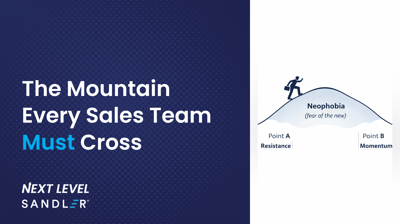
We can all admit that 100% of professionals didn’t go into business because they like to “sell.”
Engineers solve complex problems. Lawyers advocate. Accountants interpret financial truth. Consultants offer strategic insight. None of these roles traditionally come with business development in the job description, but to grow a successful firm in today’s marketplace, they have to.
If you can't build relationships, identify opportunities, and communicate value, your technical brilliance will hit a ceiling. Not because you’re not good at the job, but because no one knows just how good you are.
And when BD is seen as something “other people” do, growth becomes inconsistent, reactive, and heavily dependent on a few rainmakers. That’s not sustainable.
Let’s talk about how to change it.
Why Professionals Resist Business Development
Before we talk about shifting mindset, we need to understand the friction.
We’ve worked with hundreds of professionals across industries, and here’s what we’ve consistently seen:
Fear of seeming pushy or self-promotional
Discomfort with ambiguity or rejection
Lack of structure, process, or training
Concern that BD will take time away from real work
These are normal human responses. And until leaders acknowledge them and build systems to support the shift, most professionals will remain stuck in delivery mode, hoping someone else will bring in the work.
BD Mindset Shift #1: From “Selling” to Helping
We don’t teach people to “sell.” We teach them how to lead business conversations that create clarity, uncover opportunity, and build trust. The mindset shift starts with redefining what business development is:
- Asking smart, empathetic questions
- Being curious about a client’s bigger picture
- Offering ideas without immediately solving
- Earning the right to explore a next step
The most trusted advisors aren’t the smartest person in the room; they’re the ones asking the questions no one else thought to ask.
BD Mindset Shift #2: From Expertise First to Problem First
Most professionals are trained to lead with credentials, capabilities, and past successes. But clients don’t hire you for what you’ve done. They hire you because they believe you understand what’s at stake for them.
We coach professionals to adopt a “doctor/detective” mindset and to stop diagnosing before you’ve heard the symptoms. The Next Level program teaches professionals how to uncover client motivation at three levels:
Business Impact – What's the strategic or financial cost of the problem?
Operational Strain – How is this showing up day-to-day in their world?
Personal Friction – Who is feeling the pressure and why does it matter to them?
When professionals get curious, their conversations shift from technical to transformational.
BD Mindset Shift #3: From Polite Follow-Up to Purposeful Process
This is where things break down most often. A professional has a good meeting, hears some interest, sends a thoughtful follow-up… and then waits. The opportunity fades. No one was clear on the next steps or expectations.
We teach professionals to use Up-Front Contracts—a simple, respectful tool to clarify what happens next, who’s doing what, and what a “yes” or “no” will look like. Examples:
🗣️ “If you don’t think this is the right fit, I’d appreciate your honesty.”
🗣️ “Would it make sense to schedule 20 minutes next week to recap this with your partner?”
🗣️ “What’s the best way for us to decide whether to move forward together?”
No pressure. Just clarity.
BD Mindset Shift #4: From Hero to Guide
You don’t need to have all the answers. You need to be confident in leading a conversation that helps a client discover their own. The best business development professionals (regardless of title) know how to:
Ask uncomfortable questions with empathy
Say “no” when the opportunity isn’t aligned
Talk about money without flinching
Understand how decisions get made
Position themselves as a long-term asset, not a short-term pitch
These are learnable skills, and they’re critical if you want your professionals to develop client relationships that drive growth, retention, and referrals.
What Leaders Can Do Right Now to Develop a BD Mindset in Their Team
If you’re leading a firm full of technical experts, here are three things you can do to shift your culture toward business development:
Normalize the discomfort – Make it okay to say, “This is new for me.” Support them with language, not just goals.
Coach behavior, not just results – Track BD behaviors like outreach, conversations, and introductions, not just revenue closed.
Invest in real development, not just workshops or talk tracks – BD isn’t a one-time training. It’s a mindset shift, a coaching rhythm, and a behavior system that gets reinforced over time.
Your Clients Don’t Want a Sales Pitch. They Want a Partner.
Your professionals already have the trust, the access, and the capability. What they often lack is the structure and confidence to lead the conversation toward new business. That’s where we come in.
We’ve helped professionals in law, finance, engineering, and consulting build real business development habits without changing who they are. It’s not about turning them into salespeople. It’s about helping them show up like the trusted advisors your firm needs.
Need help building a culture of client development in your firm? Let’s talk.